




There’s never been a better time to engage with emerging research at the CHEST Annual Meeting.
A record-breaking 2,293 scientific abstracts and 3,800 case reports were submitted ahead of CHEST 2026, October 18 to 21 in Phoenix. The thousands of resulting oral, rapid-fire, and poster presentations will reveal novel findings, showcase fresh perspectives, spark exciting collaborations, and potentially even shape the future of pulmonary, critical care, and sleep medicine.

“Research is what drives and fuels our clinical progress. Scientific curiosity generates questions and, often, answers that improve and modernize health care for the betterment of everyone,” said Ashima Sahni, MD, MBBS, FCCP, Vice-Chair of the Scientific Presentations and Awards Committee, which selects the abstracts for presentation.
Many of the abstracts presented at CHEST 2026 will mirror hot topics in current clinical practice, including the impact of artificial intelligence tools and new pathways for intervention in airways disease. Committee members are excited to share rigorously graded original investigations that highlight the importance of environmental particulates as modifiable risk factors for lung disease, including “The Effects of Cooking With Liquefied Petroleum Gas vs Biomass on Lung Function in Adult Peruvian Women” and “PM2.5 Exposures Induce Macrophage-Mediated Remodeling of the Lung Epithelium to Promote Lung Cancer in Never Smokers,” as well as studies that emphasize advances in critical care, such as “Diaphragmatic Signaling and Ventilator Weaning: A Systematic Review of Stimulation Strategies.”
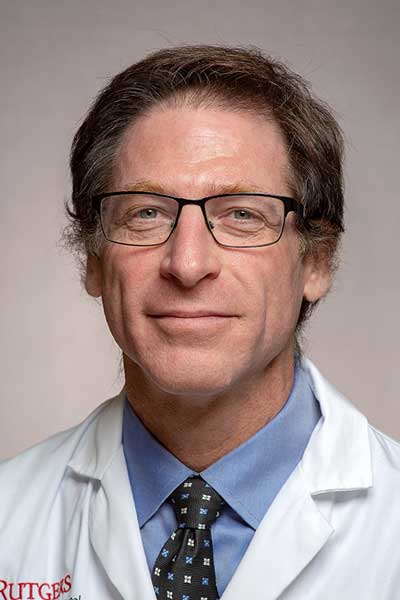
“You perform your research in a small bubble. When you go to the meeting, you see other people doing research in the same field, doing techniques differently, coming up with similar or different observations,” said Andrew Berman, MD, FCCP, Scientific Presentations and Awards Committee Chair.
“Sometimes there is someone who has come up with an idea which, even if it’s your field, you may say, ‘Wow, I’ve never thought about that,’” he added. “It’s an opportunity for discovery, for networking, for encouragement, and for sharing enthusiasm.”
That sense of discovery and shared excitement also permeates the meeting’s case report presentations, which highlight unusual diagnoses, unexpected complications, new treatment approaches, and the clinical reasoning behind difficult cases.
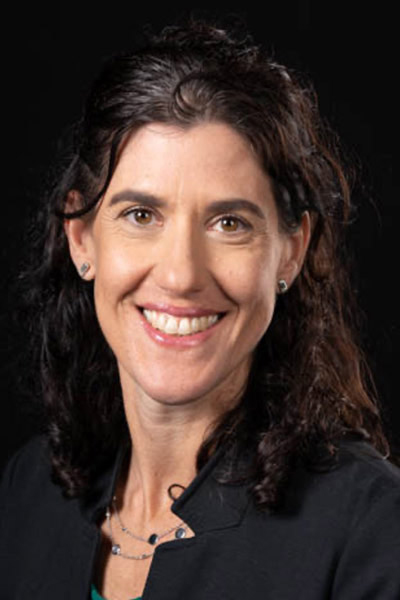
“Case reports are such an important part of the meeting because they bring clinical medicine to life,” said Meredith Turetz, MD, FCCP, Chair of the Training and Transitions Committee, which oversees the case report program.
Of the many outstanding submissions the committee is excited to highlight at CHEST 2026, Dr. Turetz pointed to “Deglutition-Induced Paroxysmal High-Degree Atrioventricular Block in a Patient With Stage IV Esophageal Adenocarcinoma,” a memorable case of recurrent complete heart block triggered by swallowing in a patient with esophageal cancer. “Normal CT, Devastating Stroke: Delayed Recognition of Cerebral Air Embolism After Bronchoscopic Balloon Dilation,” she said, will detail a rare but catastrophic complication of therapeutic bronchoscopy and the importance of early recognition. Another highly rated case, “Medullary Thyroid Carcinoma in Pediatric Multiple Endocrine Neoplasia 2B Presenting With Pulmonary Fibrosis and Lymphangitic Carcinomatosis,” will discuss an 8-year-old who presented with respiratory failure from metastatic medullary thyroid carcinoma and improved substantially with RET-targeted therapy.
Medical students and residents submit the majority of case reports, which serves as an important opportunity for trainees and early career clinicians to participate in high-quality scholarship, Dr. Turetz said. Fielding feedback at the meeting also helps presenters build confidence—especially as first-timers—and it connects them to mentors, collaborators, and the larger CHEST community.
Leaders of both committees encourage all attendees to find an abstract or case report session that interests them, stop by one of the poster sessions in the Exhibit Hall, and even consider signing up next year to review submissions or moderate a session.
“Every time I come back from CHEST, I leave with fresh ideas and renewed motivation,” Dr. Sahni said. “The meeting reenergizes you for the year ahead. It reminds you that you’re part of a larger community of people working toward the same goal and that the work you do truly matters.”
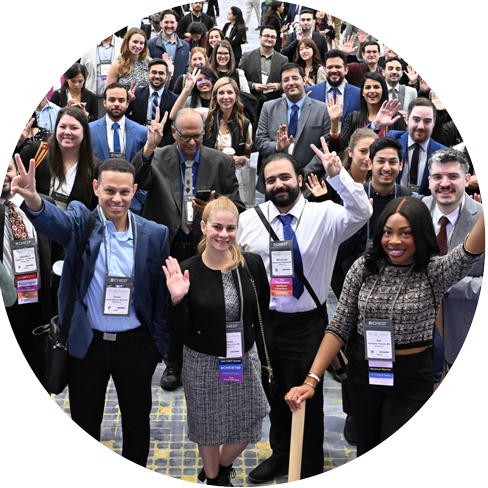
Join Us at CHEST 2026
Connect in person with influential clinicians from around the world—and attend top-tier educational sessions focusing on the most relevant clinical topics. CHEST 2026 will have it all, including optional add-on sessions to customize your learning. Reserve your spot by October 5 to save $100 with advance registration pricing.
