





Over the last five years, position papers and clinical statements from major medical societies have had considerable impact in the search for the possible early stages of interstitial lung disease (ILD) by defining interstitial lung abnormalities (ILAs) and formulating recommendations for ILA screening, diagnosis, and treatment.
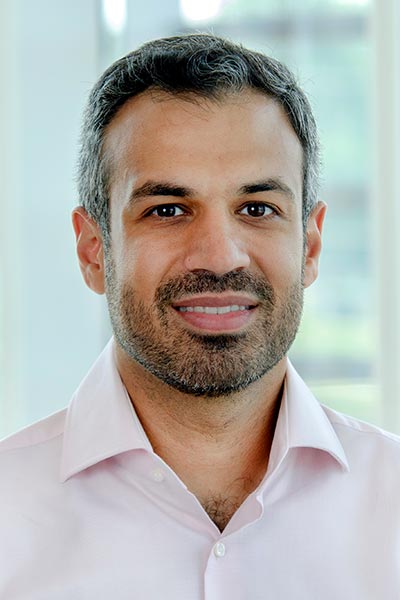
“It has been important to have this clarification of how we move from ILA diagnosis to an ILD,” explained Said Chaaban, MD, MBA, FCCP, Associate Professor in the Division of Pulmonary, Critical Care, and Sleep Medicine at the University of Nebraska College of Medicine. “For ILDs, we have guidance for treatment based on the classification of the ILD, but it is a muddier picture for ILAs with no current approved therapies.”
Dr. Chaaban will chair the CHEST 2026 session ILAs to ILDs: Detecting Early Disease in the Age of Precision Medicine at 8 am MST on Wednesday, October 21, in the Phoenix Convention Center, West Building, Room 102A. Chest medicine professionals of all levels and fields will have a chance to learn how these recent clinical statements can be applied to specific case studies and are already affecting patient care in real-world practice. Attendees also will have the opportunity to consider how near-future technological advances might transform work in the continuum from ILA diagnosis to ILD treatment.
“This session is for a very broad audience,” Dr. Chabaan said. “We have designed it for trainees, community pulmonologists, academic pulmonologists, radiologists, rheumatologists, and others who encounter ILAs in their work.”
Discussions will begin with an ILA case study by Fernando Camacho, MD, a Pulmonary, Critical Care, and Sleep Medicine Fellow at the UTHealth Houston McGovern Medical School. Dr. Camacho will review classifications and diagnosis guidelines and introduce relevant commentary from recent literature.
Expanding on the case study, Rakesh Shah, MD, FCCP, Chief of the Division of Cardiothoracic Imaging at Northwell Health, will examine ILAs from a radiologist’s perspective, focusing on definition, prevalence, and significant patterns.
Margaret Kypreos, MD, Assistant Professor in the Department of Internal Medicine at UT Southwestern Medical Center, will explore case studies of ILAs, mainly in patients with a connective tissue disease, and review the guidelines for screening, treatment, and follow-up procedures.
Dr. Chaaban will close the session with short recaps of the high-risk features, genetics, follow-up pathways, and how the guidelines delineate ILAs and ILDs and address and recommend harm minimization. Then, he will posit what near-future developments might soon affect the diagnosis and treatment of ILAs and ILDs, particularly with respect to the “S modifier” in radiology readings, a designation for significant or potentially significant findings other than lung cancer.
“Right now, the radiologist sees these abnormalities and reports them, but we’re still deficient in capacity for the follow-ups with patients,” Dr. Chaaban said. “We also have yet to see the role of artificial intelligence and quantitative imaging as a stratification engine and how biomarkers and genetics will be integrated for prognostication.
“Hopefully, the future will help in resolving the progression definitions, better defining the follow-up intervals, expanding and unifying screening approaches for specific populations, and addressing the most important therapeutic question of intervening early versus sitting tight and observing a patient—this is where the future is heading and some themes we hope to discuss with attendees.”
Call for Topics Is Open
Feeling inspired by all the great sessions you’ve attended? Help shape the curriculum for CHEST 2027, October 24 to 27 in Vancouver, by submitting topic ideas from areas you’re passionate about, topics affecting your practice, or new technologies you’d like to learn more about. The submission deadline is Tuesday, December 1, at 2 pm CT.
