






If there had been any doubt about the impact of climate change on global critical care systems, then the heat domes, disease outbreaks, and wildfires during the summer of 2026 should have crystalized the nature and extent of this threat, said Gabriel Bosslet, MD, FCCP.
To share insights about the scale of this threat, its systemic implications, and the urgent need for institutional and policy-level preparedness, Dr. Bosslet will chair the CHEST 2026 session Climate Change as a Mass Casualty Threat: Implications for Critical Care Systems at 2:45 pm MST on Tuesday, October 20, in the Phoenix Convention Center, North Building, Room 228B.
Dr. Bosslet will begin the session with an overview of heat-related illnesses as a mass casualty risk. Bhavita Gaglani, MD, Assistant Professor in the Section of Infectious Diseases at Wake Forest University School of Medicine, will address climate-driven shifts in infectious diseases. Erika Mosesón, MD, MA, FCCP, Pulmonary and Critical Care Physician with Legacy Medical Group, will speak about the challenges that wildfires and air quality pose to critical care. And Stephanie Maximous, MD, MS, Assistant Professor in Pulmonary, Allergy, Critical Care, and Sleep Medicine at the University of Pittsburgh, will discuss ICU readiness and system resilience amid climate-related mass casualty events.
“Part of this session is to help colleagues realize that these crises, whether they are a heat dome or a climate-driven infectious disease, could happen anywhere,” Dr. Bosslet said. “We need to understand that they are going to happen where we live and work and that we can sort of prepare for them by learning lessons from places that have had to deal with these challenges.”
Dr. Bosslet noted that knowledge gleaned from past experiences is a bright spot amid the daunting prospects and challenges of impending mass casualty events—and one that will be explored throughout the session to provide actionable takeaways.
“We have learned a lot—some of it we have implemented and some of it we have not,” Dr. Bosslet said. “The COVID-19 pandemic alone taught us so much about how to ramp up ICU capacity, so I think we are better and more prepared now in comparison to the prepandemic era. We better understand how to increase capacities for beds, ventilators, dialysis machines, and other essential medical aspects of critical care. And we also understand how better to expand the human capital—the implications of working in an ICU that is at three-times maximum capacity.”
Dr. Bosslet also pointed to lessons learned about crucial systematic secondary and preparatory approaches that can help mitigate risks and stem the inflow of people into ICUs, such as advocating for and providing cooling stations during a heat crisis and designating and protecting clean breathing shelters during a wildfire.
These lessons—combined with preparation for future mass casualty events—present essential knowledge for those who work in critical care units, Dr. Bosslet said, as well as for public health professionals, departmental supervisors, support staff, and administrators. All of these groups will have to contend with the ripple effects of major crisis events, including staffing shortages, security concerns, and the need to clearly communicate priorities and dangers to the general public as well as policymakers. They also have a moral obligation to ensure that policies are designed to prioritize health equity and protect vulnerable populations.
“This session is oriented toward those of us who plan on being here in a decade or two—which I hope is all of us,” Dr. Bosslet said. “In a decade or two, the things we will be talking about in this session will be happening more and more frequently, and this conversation will seem very prescient.”
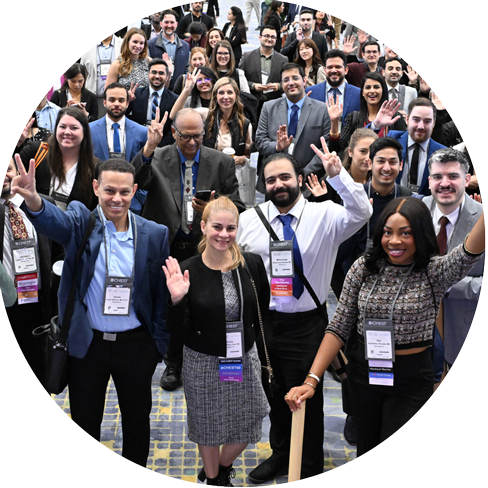
Call for Topics Is Open
Feeling inspired by all the great sessions you’ve attended? Help shape the curriculum for CHEST 2027, October 24 to 27 in Vancouver, by submitting topic ideas from areas you’re passionate about, topics affecting your practice, or new technologies you’d like to learn more about. The submission deadline is Tuesday, December 1, at 2 pm CT.
