





For clinicians, productivity has never been harder to define. During the CHEST 2026 session Measuring What Matters: Confronting the Pseudo-Productivity Paradox in Modern Medicine on Tuesday, October 20, speakers challenged attendees to rethink whether the metrics that dominate modern health care actually reflect the work that matters most: caring for patients.
‘The shadow of the work’
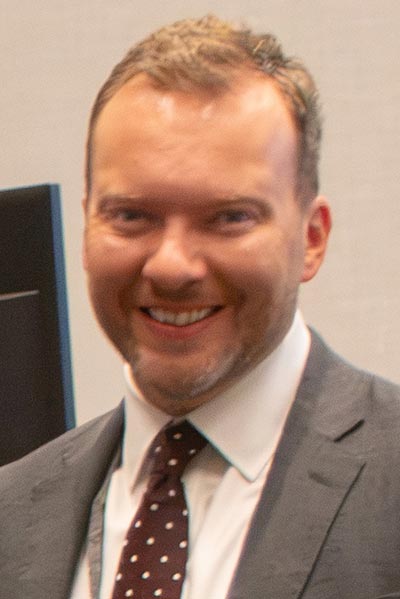
Scott M. Matson, MD, Associate Professor of Medicine at the University of Kansas Medical Center, described pseudo-productivity as confusing visible activity with meaningful accomplishment.
“What we are talking about is the difference between the actual work and the shadow of the work,” Dr. Matson said. “What occurs in the patient’s room and then what occurs when we sit down in front of the computer.”
Published time-motion studies show physicians spend more time interacting with electronic health records (EHRs) than directly caring for patients, he noted. While EHRs offer important benefits, he argued that organizations increasingly reward metrics that are easy to measure rather than outcomes that are most meaningful.
“Once you start to measure something, behavior starts to change,” he said. “I think we have more agency here than we imagine.”
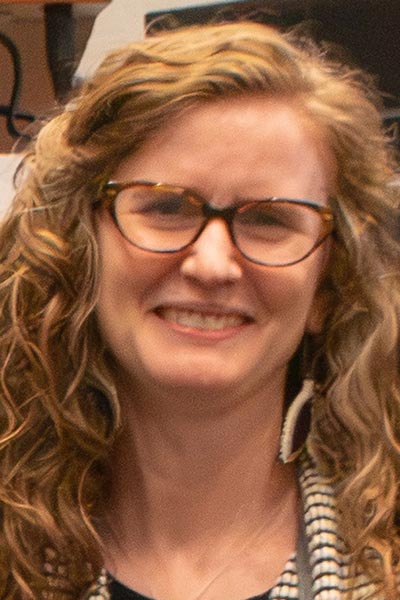
In addition to direct patient care, pseudo-productivity also affects research, education, and clinician well-being, said Session Chair Amy E. Morris, MD, FCCP, who serves as CHEST 2026 Scientific Program Committee Chair and is Associate Professor in the Division of Pulmonary, Critical Care, and Sleep Medicine at the University of Washington School of Medicine.
“We all know what this is intuitively,” she said. “I think it’s a question of articulating it and identifying it in a way that we can actually start doing something about it.”
Dr. Morris asked the audience to gather in small groups and discuss their pseudo-productivity concerns. Attendees repeatedly pointed to documentation and administrative requirements that seem built more for effective billing than for effective patient care.
Participants also worried that an increasing emphasis on metrics and documentation was eroding clinical reasoning and narrative medicine—in other words, spending more time documenting actions than documenting care or explaining the thinking behind it.
The impact of AI
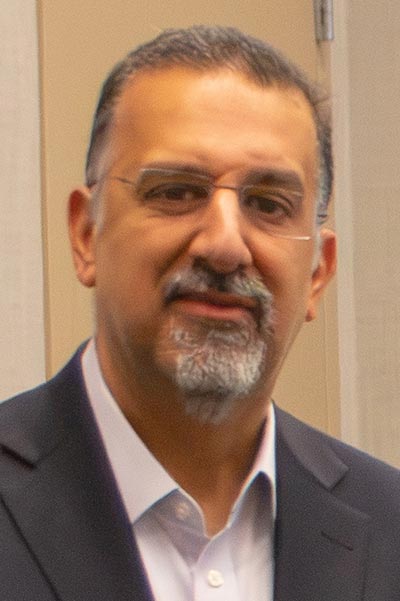
Nitin Seam, MD, Professor of Medicine and Assistant Dean for Innovation and Educational Technologies at the University of Maryland School of Medicine, called artificial intelligence (AI) the “elephant in the room” and urged clinicians to learn from the lessons of EHR adoption rather than assume AI will solve existing problems.
“There are promises that are going to be made,” he said about AI. “Some of them might work out. Some will not be true, and there’ll be unintended consequences.”
Dr. Seam emphasized that clinicians must help shape how AI is developed and implemented, particularly in pulmonary and critical care settings where decisions have high stakes and are cognitively demanding.
“We don’t want to cognitively offload the things that are foundational to who we are as clinicians,” he said, calling this “the fundamental question” facing the profession.
When talking about the emerging evidence of de-skilling, Dr. Seam stressed careful oversight of AI use by trainees.
“It is OK to lose some skills… but not the ones that are part of our core identity or the core identity of what we think the future physician will do.”
Optimizing EHR use
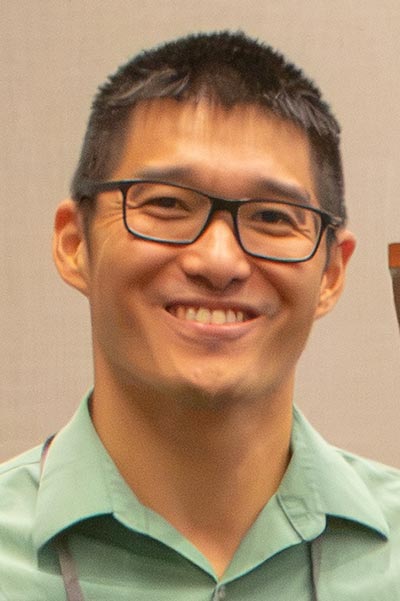
Edward Qian, MD, MSc, Assistant Professor in the Division of Pulmonary and Critical Care Medicine and Department of Biomedical Informatics at Vanderbilt University Medical Center, focused on how EHR optimization and AI can reduce administrative burden while improving care and research.
Dr. Qian challenged attendees to ask “why not” when considering technology-based optimizations at their home institutions. “You’ll probably find that the barriers are lower than you think they are.”
Rather than presenting technology as either the problem or the solution, he argued that better informatics design can reduce pseudo-productivity. He highlighted efforts to reduce alert fatigue and unnecessary clicks through systematic review and redesign, resulting in substantial workflow improvements. He also advocated for context-aware decision support that delivers “the right information to the right person, the right format, through the right channels, at the right time in their workflow.”
Beyond care delivery, Dr. Qian discussed how large language models and EHR-based informatics can support research by screening large datasets, identifying rare clinical events, and facilitating EHR-embedded clinical trials.
Technology, he emphasized, should strengthen rather than replace patient-centered care. “We need to get out from behind the computer and back to the bedside.”
Confronting pseudo-productivity

Dr. Morris summarized several practical recommendations that emerged when attendees reconvened from small group discussions:
- Improve order sets and clinical workflows.
- Reduce unnecessary pop-ups and alerts.
- Increase clinician involvement in system design and governance.
- Demonstrate to decisionmakers the financial cost of poor EHR design.
- Build physician informatics expertise.
- Protect clinical thinking from technology distractions.
Dr. Morris concluded that reducing pseudo-productivity will require clinician leadership, participation in informatics and governance, evidence-based advocacy, and a deliberate effort to protect critical thinking and patient care from unnecessary technological burdens. Clinicians must help shape the systems they use, she said, rather than simply accept frustrating workflows.
Call for Topics Is Open
Feeling inspired by all the great sessions you’ve attended? Help shape the curriculum for CHEST 2027, October 24 to 27 in Vancouver, by submitting topic ideas from areas you’re passionate about, topics affecting your practice, or new technologies you’d like to learn more about. The submission deadline is Tuesday, December 1, at 2 pm CT.
