





A multidisciplinary panel weighed current questions and evidence about the management of patients with central airway obstruction (CAO) during the CHEST 2026 pro-con debate session Central Airway Obstruction: Improving Outcomes by Implementing CHEST Guidelines on Sunday, October 18, in Phoenix.
Should airway stents be used in CAO?
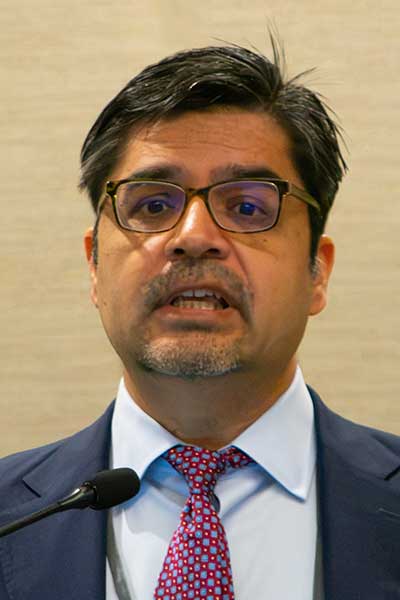
Session Chair Kamran Mahmood, MD, MPH, FCCP, Professor of Medicine and Director of Interventional Pulmonology at Duke University and lead author on CHEST’s 2024 clinical guideline on CAO, argued in favor of airway stents, emphasizing their ability to rapidly restore airway patency and stabilize patients with severe obstruction.
“Therapeutic bronchoscopy can serve as a bridge to definitive treatment for these patients,” he said, noting that some patients with malignant CAO are too symptomatic to undergo radiation or systemic therapy until their airways are reopened.
Dr. Mahmood highlighted evidence showing improvements in pulmonary function, dyspnea, and quality of life after therapeutic bronchoscopy, particularly in patients with extrinsic or mixed airway compression. Successful intervention may also enable subsequent cancer-directed therapy.
He stressed, however, that stents should be viewed as temporary devices rather than permanent implants. “These stents should be removed as soon as possible once the underlying disease has responded to treatment,” he said. Current CHEST guidelines support stent placement in symptomatic patients when other bronchoscopic or systemic therapies are insufficient.
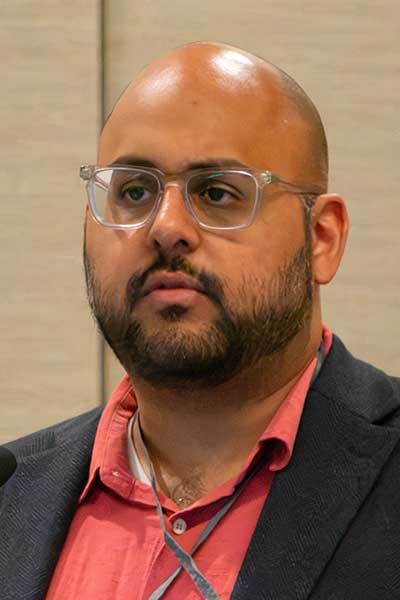
Gaurav Ajmani, MD, Assistant Professor of Medicine at the University of Maryland School of Medicine, explored arguments against airway stenting in CAO. “There’s a very low certainty of evidence,” he said, noting the lack of high-quality data to guide patient selection.
Dr. Ajmani reviewed risks associated with airway stents, including migration, infection, mucus retention, granulation tissue formation, and fracture. He noted that complication rates have been reported between 40% and 60% and may approach 80% in some series. Advances in radiation, immunotherapy, and targeted therapies require clinicians to continually reassess whether stenting is necessary for a given patient, he said.
Despite offering differing perspectives, both speakers agreed that airway stents should generally be considered a temporary measure used to stabilize carefully selected patients until definitive treatment can be delivered. They emphasized close follow-up, timely stent removal when feasible, and collaboration among interventional pulmonologists, medical oncologists, radiation oncologists, and thoracic surgeons.
Radiation therapy for malignant CAO?
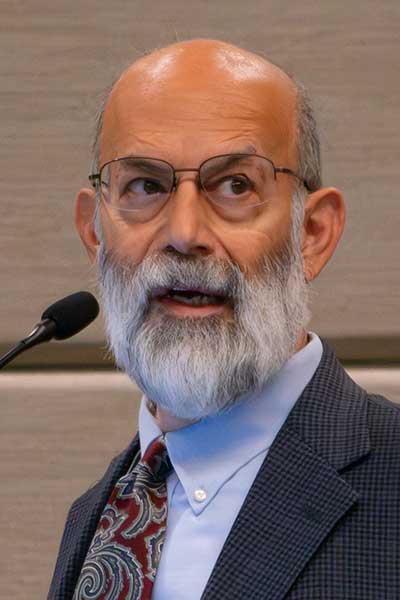
Steven E. Schild, MD, Radiation Oncologist at Mayo Clinic Arizona, reviewed evidence supporting palliative radiotherapy for patients with advanced lung cancer and malignant CAO. Historical studies have shown that radiation can provide meaningful symptom relief.
A major focus of Dr. Schild’s presentation was the comparison of external beam radiation therapy with endobronchial brachytherapy. In a randomized study of 99 patients with airway obstruction, good symptom palliation was achieved in 83% of patients treated with external beam radiation compared with 59% of those treated with brachytherapy. He noted that external beam radiation produced more durable symptom control and generally required fewer retreatments, while adding brachytherapy provided limited additional benefit.
He stressed that radiation is not an immediate solution for severe airway obstruction. “Radiation kills cells the next time they try to reproduce, not when you radiate those cells,” he said, explaining that patients with urgent airway compromise may first require bronchoscopy, stenting, or surgery before radiation can provide meaningful benefit. He emphasized the need for additional high-quality studies to better define optimal treatment strategies.
Surgery or therapeutic bronchoscopy for malignant CAO?
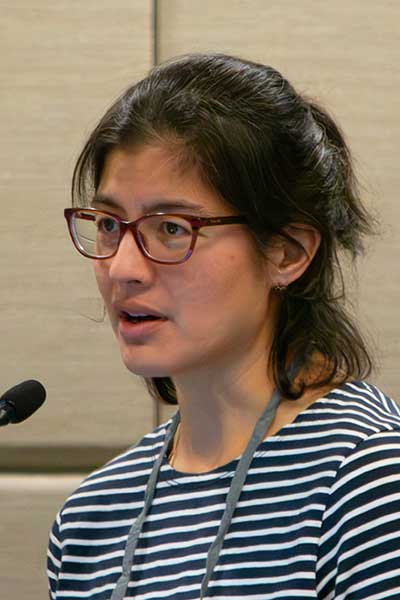
Maria Lucia Madariaga, MD, Associate Professor of Thoracic Surgery at the University of Chicago, discussed the relative roles of surgery and therapeutic bronchoscopy in managing malignant CAO, emphasizing that treatment decisions should be guided by tumor biology, patient condition, and therapeutic goals. She cited airway surgery pioneer Hermes Grillo, MD, who warned that infatuation with technology sometimes obscures basic science and common sense.
Dr. Madariaga highlighted bronchoscopy’s key role in stabilizing patients with airway compromise. “We establish airway patency and you can change an urgent situation to an elective situation,” she said.
Reviewing evidence across carcinoid tumors, squamous cell carcinoma, and adenoid cystic carcinoma, she repeatedly emphasized careful patient selection. For carcinoid tumors, she said, “I land on surgery for curative intent,” while acknowledging that therapeutic bronchoscopy may be appropriate for certain patients or as a bridge to surgery. She also cautioned that bronchoscopic management carries meaningful risks of recurrence and requires long-term surveillance.
During the question-and-answer part of the session, Dr. Mahmood summarized the session’s central themes: multidisciplinary decision-making, appropriate patient selection, and individualized treatment planning. Panelists agreed that bronchoscopic-, surgical-, and radiation-based approaches all play important roles in managing CAO and that the best outcomes are achieved when specialists collaborate to tailor therapy to each patient’s disease, anatomy, and goals of care.
