




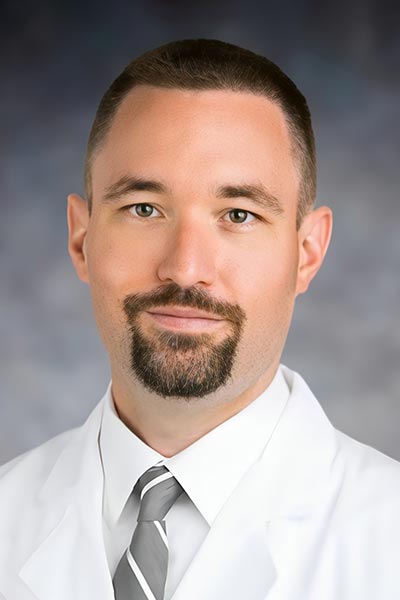
Simulation sessions at the CHEST Annual Meeting give clinicians hands-on practice with the latest procedural equipment and techniques, but the value of the experience goes beyond simple rehearsal and repetition, said Zachary DePew, MD, FCCP, Chair of CHEST’s Live Learning Subcommittee.
“People want to learn how to treat a condition or they want to solve a problem. So they’re not looking for just, ‘How do I put this valve in?’ They’re looking for, ‘How do I fix this air leak?’ And there are often many ways to accomplish a goal,” Dr. DePew said.
More than three dozen unique sessions from Sunday through Tuesday during CHEST 2026, October 18 to 21 in Phoenix, will empower clinicians to tackle their dilemmas in pulmonary, critical care, and sleep medicine, including persistent air leak, airway bleeding, foreign bodies in the airway, pleural effusions, and more.
Nine new offerings are spread across clinical domains and include two 30-minute courses that will be available in multiple time slots—Master Ultrasonography in Minutes: One-on-One Coaching for Cardiac Point-of-Care Ultrasound and Acute Hidden Pressure: A Quick Intro to Esophageal Manometry. Others, like Interventional Strategies for Persistent Air Leak: Endobronchial Valves, Blood Patch, and Talc Pleurodesis, may look familiar to anyone who has browsed the schedule in the past, but they have been rebuilt or significantly refocused based on learner feedback, Dr. DePew said.
“We take feedback very seriously: ‘I could use more of this,’ or ‘This part was missing,’ or ‘This was too long,’” he said. “We take all that feedback and then we completely revamp those sessions. And some of them are not completely brand new, but they’ve been refined or retooled. All of them go through that kind of iterative process.”
Many popular returning sessions, including Escape: Intubate This Patient—and Fast!, Awake Intubation in the ICU, Guideline-Based: This Is NOT the Bronch Suite, and The Bronchoscopy Grand Slam: Critical Skills and Complication Management Techniques, have also been updated to reflect the latest clinical guidelines or new technologies.
Following a successful pilot last year, CHEST will again offer a small number of 15- to 20-minute pop-up simulations in the Exhibit Hall—for free.
“It’s kind of like a road show. We take stuff from the [simulation] center but bring it out into the Exhibit Hall where people are milling,” Dr. DePew said. “They can come over, real quick and easy, learn something, and then move along on their way.”
Attendees can add ticketed courses to new or existing meeting registrations. Across the schedule, the quality—high-fidelity simulations, expert faculty, small expert-to-learner ratios—and atmosphere keep people coming back, Dr. DePew said.
“If you’ve never done it before and have anxiety, you’re not going to find a more welcoming environment,” he said. “If you just want to dip your toes in the water, sign up for a one-hour session, just to see what it’s like. My guess is you’ll be a convert.”
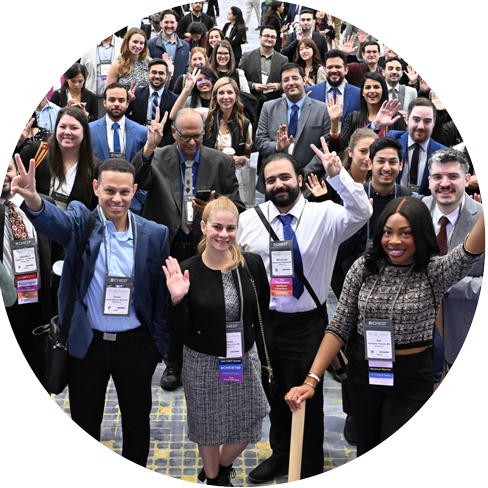
Join Us at CHEST 2026
Connect in person with influential clinicians from around the world—and attend top-tier educational sessions focusing on the most relevant clinical topics. CHEST 2026 will have it all, including optional add-on sessions to customize your learning. Reserve your spot by October 5 to save $100 with advance registration pricing.
