



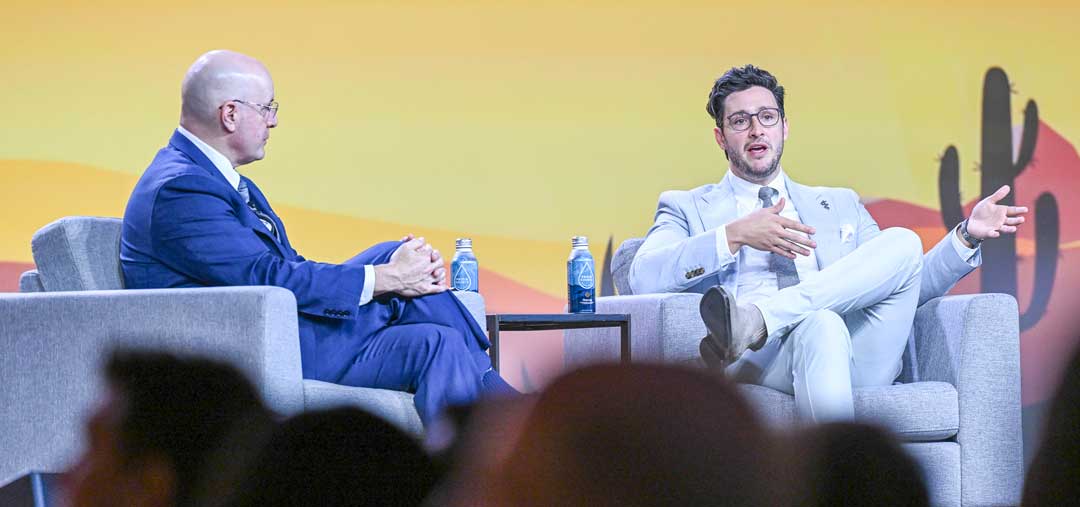
The world will continue to need clinicians and their power to influence positive change, CHEST 2026 Keynote Speaker Mikhail Varshavski, DO—better known as Doctor Mike—told attendees in Phoenix.
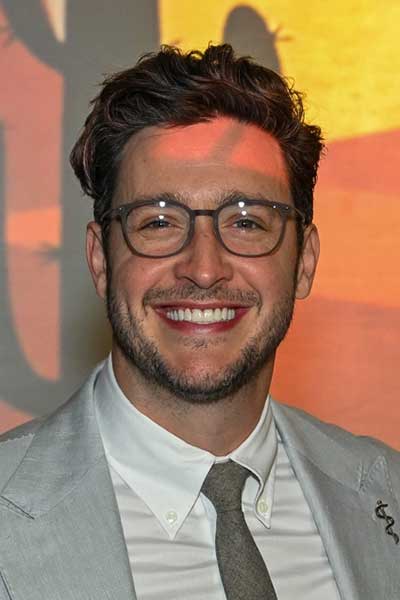
“This need will not go away, it will only continue to grow,” he said, “and by investing into your communities, into becoming an influencer, into connecting with your patients—even when they disagree with you—you can make a world of a difference.”
Doctor Mike delved into the challenges of navigating today’s complex medical landscape during a conversation with CHEST President Neil Freedman, MD, FCCP, at the CHEST 2026 Opening Session on Sunday, October 18.
Doctor Mike is a board-certified family medicine physician and health educator who has amassed more than 30 million followers across social media platforms. Known for making reliable health information accessible, he has also participated in medical conferences and media appearances, engaging in productive conversations with those who might hold opposing viewpoints.
“I think the term ‘influencer’ needs to mean something different when it comes to health care,” he said. “First, we need to realize we’re all influencers. If you’re a physician, you’re a medical provider, you are influencing your patients to have better lifestyle habits, to improve their lifespan, their quality of life.”
He pointed to specific opportunities for clinicians to influence their communities outside social media, from engaging with local church groups or exercising with patients to organizing diabetes group visits centered on healthy meals.
“There are ways to be an influencer without being logged into social media,” he said.
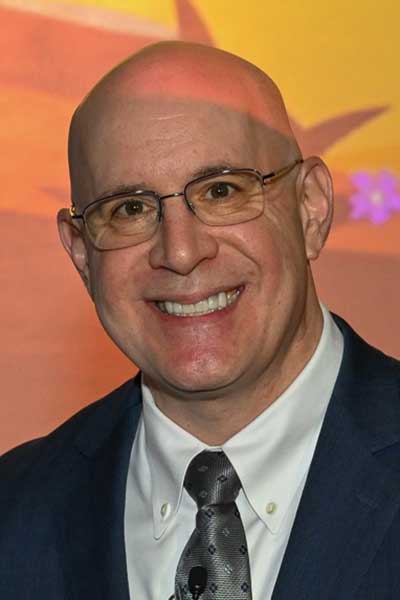
During the conversation, Dr. Freedman highlighted Doctor Mike’s ability to engage with people who disagree with him while making them feel heard, prompting a discussion about the importance of listening and validation in an increasingly digital health care landscape.
“I think everyone wants to be heard; it’s a natural human instinct,” Doctor Mike responded. “The idea of validation is incredibly important when it comes to health care. I realized that in making all these videos, we were failing our patients because we weren’t there for our patients where they are: online.”
However, Doctor Mike stressed that listening and providing validation are only half of the equation. Clinicians must also be willing to step outside their comfort zones and engage with people who might hold opposing viewpoints, he said.
“You will not change minds in many cases in one visit, in one interaction. That is not a realistic goal,” Doctor Mike said. “But what a realistic goal can be is trying to create a human connection with people who agree with you, as well as those who don’t agree with you. In the age of AI, the humanistic aspect of medicine is going to be what defines us as clinicians in the coming years.”
Looking toward the future, Dr. Freedman asked Doctor Mike what he hoped his impact would be 20 years from now, beyond social media clicks and views.
“I want to look back and say, ‘I spoke at CHEST 2026 in Phoenix, Arizona, and I got people to sit in the room and think about how they are going to do this better than me.’ I want this to be the case study that we build from, that there is a possibility to do this the right way—to put out good information, to capture people’s attention, and realize social media is a tool like anything in health care.”
Doctor Mike closed with a message addressing concerns about the medical profession’s future amid technological and political changes—topics that remain top of mind for many in the field.
“I think there is a lot of fear. I speak at conferences quite often, and there is this extinction event fear that physicians are having these days—that perhaps we’ll be phased out, that politics is going to destroy what we’re doing,” he said. “And I want to reassure folks, this is not the reality. The world needs medical providers.”
Call for Topics Is Open
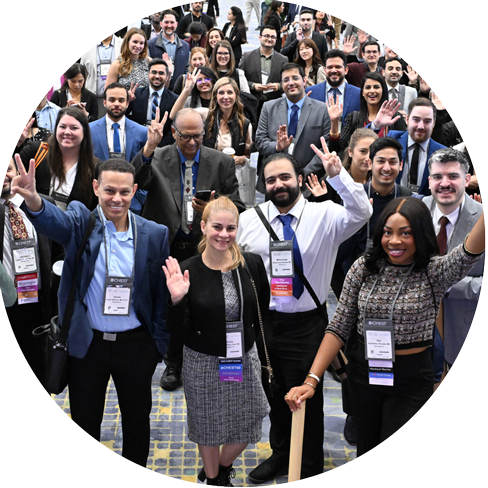
Feeling inspired by all the great sessions you’ve attended? Help shape the curriculum for CHEST 2027, October 24 to 27 in Vancouver, by submitting topic ideas from areas you’re passionate about, topics affecting your practice, or new technologies you’d like to learn more about. The submission deadline is Tuesday, December 1, at 2 pm CT.
