





Knowing when to step in, when to step back, and when to simply offer encouragement can be just as important as knowing how to perform a procedure. Effective procedural coaching requires educators to recognize the needs of an individual—from nervous first-timers to overconfident learners—and adapt their teaching approaches in real time. Yet delivering personalized instruction in clinical settings can present challenges, particularly when faculty members lack formal training in effective coaching and constructive feedback.
Faculty members shared strategies for addressing these challenges during the CHEST 2026 session Empowering Educators: Real-Time Coaching for Procedural Competency on Sunday, October 18, in Phoenix.
“In practice, a lot of our trainees are doing things in real time, and that’s where they’re getting their reps, on human beings in the hospital. This is where deliberate practice becomes really important,” said Session Chair Sherie A. Gause, MD, Associate Professor at Oregon Health and Science University.
After a brief introduction to procedural teaching frameworks, the session shifted from lecture to hands-on learning. At the center of the room, a table holding medical equipment and simulation materials, including an ultrasound, a laryngoscope, and anatomical models, served as the backdrop for four interactive coaching scenarios, each presenting a different challenge for medical educators.
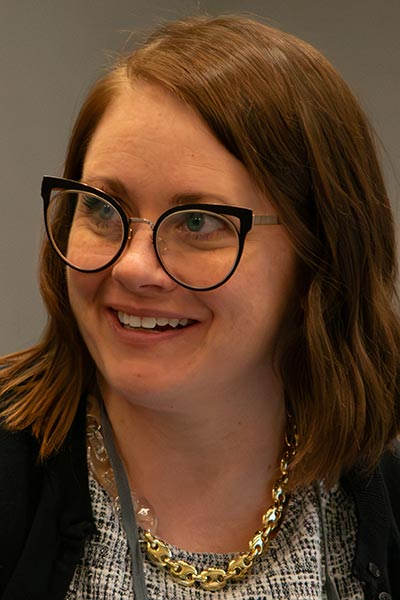
For each scenario, facilitating faculty members—Mark Warner, MD, FCCP; Kinsley A. Hubel, MD, MBBCh; Stella Ogake, MD, FCCP; and Erica L. Smith-Cohen, AGACNP—assumed the role of a trainee or learner while an attendee volunteered to serve as the coach. Following each exercise, the audience participated in a collective debrief to discuss effective coaching strategies and opportunities for improvement.

“Our goal is to try to tailor our coaching as best as we can to the learner,” Dr. Gause said.
The first scenario, “I’ve Done This on a Mannequin,” featured a trainee tasked with placing a central line in a patient who is critically ill. Although the learner described in the case study had previously performed the procedure once on a patient, most of their experience came from simulations.
During the exercise, the attendee serving as the coach guided the learner through the procedure with questions and step-by-step instructions. The subsequent debrief emphasized normalizing nervousness, offering encouragement, and reassuring trainees that supervisors are available to intervene when necessary.

A second scenario, “I Can’t See Anything,” presented a different challenge: an experienced anesthesia resident, who had logged more than 250 intubations, was in the middle of an urgent clinical situation. The discussion that ensued centered on balancing learner independence with patient safety, including when a coach should intervene.
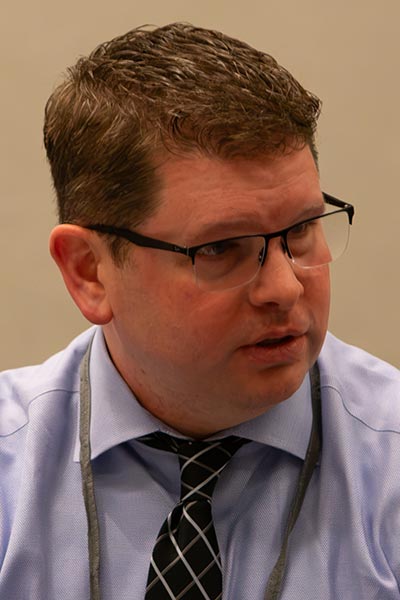
“When it comes to a directed takeover, I think this is your opportunity to talk out loud… as long as you are directing traffic, visualizing, and explicitly saying what you’re doing in a more direct fashion,” said Dr. Warner, Associate Professor at the UTHealth Houston McGovern Medical School.
The third scenario, “I’ve Got This,” explored the challenges of supervising an overconfident fellow during a thoracentesis. As the learner moved forward, the coach faced the challenge of providing appropriate corrective guidance. The debrief explored how educators can provide guidance during a procedure on a patient who is awake and stable without undermining the patient’s confidence in the trainee.

“I provide a lot of encouragement during the procedure so that the patient is also hearing you say, ‘Yep, that’s exactly as agreed. Let’s do that as our next step,’” said Dr. Hubel, Associate Professor at Oregon Health and Science University. “Everyone’s hearing that positive affirmation so that even when there are corrective steps, they still hear positive things happening.”
The final scenario, “I’ve Never Done It Like This,” involved a fellow experienced in bronchoscopy but unfamiliar with performing the procedure on a patient who was awake and minimally sedated. The discussion emphasized building on a learner’s existing knowledge without overwhelming them with unnecessary instruction.
Across the four scenarios, faculty reiterated that effective coaching requires more than correcting mistakes; it involves creating an environment where trainees feel comfortable acknowledging their limitations and developing new skills.
“Coaching is not evaluation,” said Dr. Ogake, Assistant Professor at The Ohio State University Wexner Medical Center. “And so sometimes even just make it clear and say, ‘I’m going to be coaching you through this procedure.’ When trainees are thinking they are being evaluated, they try to hide their deficiencies, so try to make that point really clear: ‘Do what you always do, I will be coaching you; this is a great time to make mistakes.’”
Call for Topics Is Open
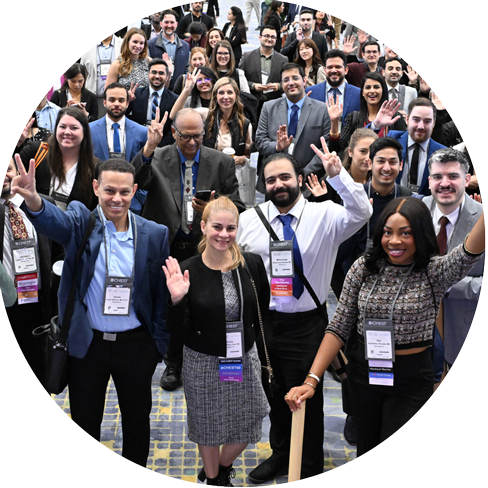
Feeling inspired by all the great sessions you’ve attended? Help shape the curriculum for CHEST 2027, October 24 to 27 in Vancouver, by submitting topic ideas from areas you’re passionate about, topics affecting your practice, or new technologies you’d like to learn more about. The submission deadline is Tuesday, December 1, at 2 pm CT.
