





Pulmonary nodules discovered on CT scans of more than 1.5 million patients in the United States each year can represent anything from a benign finding to the earliest sign of lung cancer. Ensuring that those patients receive appropriate evaluation and follow-up will be the focus of a panel discussion during CHEST 2026.
The session Building a Lung Nodule Program: Best Practices, Quality Metrics, and Use of Artificial Intelligence will take place at 4 pm MST on Tuesday, October 20, in the Phoenix Convention Center, West Building, Room 101A. Experts from leading academic, community, and international institutions will discuss what it takes to develop a high-quality lung nodule program and how emerging technologies may help address persistent gaps in care.
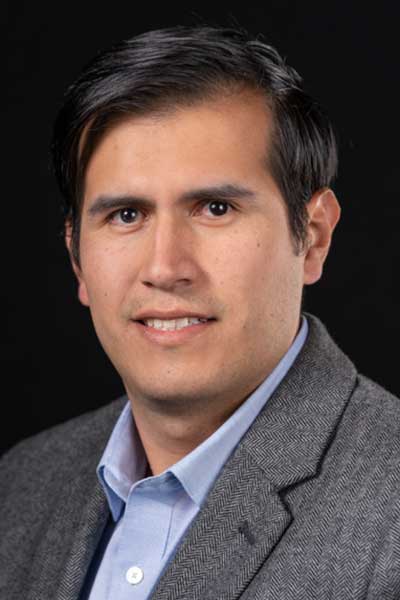
The topic has never been more important, said Session Chair Jorge Bleik Ataucuri-Vargas, MD, Associate Staff Physician in Pulmonology, Interventional Pulmonology, and Pulmonary Critical Care at the Cleveland Clinic Respiratory Institute. While lung cancer remains the leading cause of cancer-related death, many cases are still diagnosed at an advanced stage. A significant percentage—up to two-thirds of lung cancers, Dr. Ataucuri-Vargas noted—are identified not through formal screening programs but incidentally when imaging is performed for other reasons.
That reality underscores the need for structured systems that ensure pulmonary nodules are tracked, evaluated, and managed appropriately. Without those systems, patients can fall through the cracks, creating risks for both individual outcomes and health care organizations, he said.
“One of the biggest challenges when you start to build an incidental lung nodule program is the risk of delayed or missed lung cancer diagnosis,” Dr. Ataucuri-Vargas said. “This not only impacts patient outcomes, increased mortality, and decreased survival, but it can also create medicolegal risk for institutions.”
Rather than focusing solely on theory, the session will offer attendees practical guidance from programs operating in different health care environments. Dr. Ataucuri-Vargas will share lessons learned from developing and refining a lung nodule program within a large academic medical center, highlighting the components that contribute to an effective and sustainable model.
Attendees will also hear a complementary perspective from Raymond Osarogiagbon, MD, Chief Scientist for Baptist Memorial Health Care and Director of the Multidisciplinary Thoracic Oncology Program and the Thoracic Oncology Research Group for Baptist Cancer Center in Tennessee. His presentation will focus on best practices for implementing and operating a program in a community-based setting, offering insights particularly relevant to organizations with different resource levels and patient populations.
Quality measurement will be another key focus of the session. As health care systems increasingly prioritize accountability and outcomes, many organizations are asking how to determine whether a lung nodule program is truly successful, Dr. Ataucuri-Vargas said. Alice Turner, MBChB, PhD, Professor of Respiratory Medicine at the University of Birmingham, will address that challenge by presenting proposed quality metrics and approaches for measuring program performance.
Finally, Peter Mazzone, MD, MPH, FCCP, Director of the Lung Cancer Program and Lung Cancer Screening Program for the Respiratory Institute at Cleveland Clinic, will explore one of the most talked-about subjects in health care today: artificial intelligence (AI). Interest in AI applications continues to grow across pulmonary medicine, and Dr. Ataucuri-Vargas said he believes the technology has potential to address a major operational challenge facing many lung nodule programs.
“The volume of these programs can increase significantly,” he said. “Some institutions might not have enough resources or infrastructure to follow up all these patients who have nodules. There is the concern that some of them get lost, so maybe AI might help as a way to monitor that.”
At the same time, he emphasized the importance of approaching AI thoughtfully and realistically.
“We should take this with a grain of salt, the incorporation of AI in the workflow of incidental lung nodule programs,” Dr. Ataucuri-Vargas said. “Regardless of AI or not, that can come with additional costs that could be prohibitive for certain institutions; a high-quality lung nodule program should be measured by its results focused on patient-centered outcomes.”
Building a Lung Nodule Program: From Detection to Diagnosis
A new checklist from CHEST helps clinicians identify the essential structural components of a high-functioning lung nodule program, including defined leadership roles and program scope.

Join Us at CHEST 2026
Connect in person with influential clinicians from around the world—and attend top-tier educational sessions focusing on the most relevant clinical topics. CHEST 2026 will have it all, including optional add-on sessions to customize your learning.
