





While clinical guidelines provide an essential framework in pulmonary hypertension (PH) care, many of the most difficult decisions occur in gray zones where evidence is limited and clinical judgment becomes paramount.
During the CHEST 2026 session Guidelines vs Real-Life Expert Decisions in Pulmonary Hypertension Treatment: A Conversation With Experts on Sunday, October 18, in Phoenix, case-based discussions demonstrated how successful management often requires integrating hemodynamics, imaging, risk assessment, and patient-specific factors rather than relying on classification schemes alone.
Across all six cases, a consistent message emerged: Guidelines remain indispensable, but the management of PH often requires clinicians to navigate uncertainty, interpret complex and sometimes conflicting data, and tailor treatment strategies to the individual patient sitting in front of them. The panel agreed that the most effective care frequently lies not in rigid adherence to algorithms but in the thoughtful application of clinical expertise to the shades of gray that define real-world PH practice.
Scleroderma and PAH

Session Chair Francisco J. Soto, MD, MBA, FCCP, Professor and Chief of the Pulmonary and Critical Care Medicine Division at the University of Tennessee Health Science Center College of Medicine, opened the session with a scleroderma case. Oksana Shlobin, MD, FCCP, Medical Director of the Pulmonary Hypertension Program at Inova Fairfax Hospital, elaborated on the scenario, addressing the challenges of managing PH in patients with systemic sclerosis and coexisting interstitial lung disease (ILD).
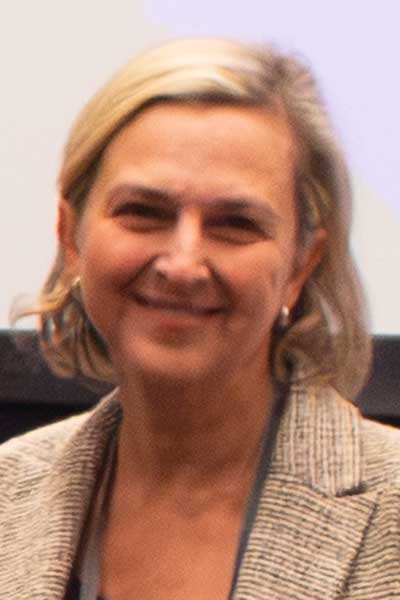
Dr. Shlobin cautioned clinicians against relying solely on pulmonary function testing to assess lung involvement in patients with scleroderma. When asked whether advanced imaging should be routinely obtained in such patients, her response was unequivocal: “In all of them.”
She also urged clinicians to move beyond making rigid distinctions between Group 1 and Group 3 disease, noting, “There’s a continuum of pulmonary vascular impairment and there’s a continuum of [ILD].” Her discussion highlighted the importance of identifying pulmonary veno-occlusive disease, monitoring worsening hypoxemia, and considering early transplant referral in patients at high risk.
Pregnancy and PAH

Anna Hemnes, MD, Professor and Chair of the Department of Medicine at Vanderbilt University Medical Center, discussed navigating pregnancy in patients with pulmonary arterial hypertension (PAH). Reviewing the profound physiologic changes of pregnancy, she explained that there’s a marked increase in cardiac output by midpregnancy and emphasized why these changes can be particularly dangerous for patients with PAH: “There’s just no more vasculature to move that blood through.”
Although pregnancy remains strongly discouraged in patients with PAH, Dr. Hemnes acknowledged evolving conversations about shared decision-making for carefully selected patients. “It’s not never, but only in the rare candidate,” she said. She stressed that management in specialized centers is essential and said referral to an experienced tertiary PH program was mandatory.
Group 2 PH
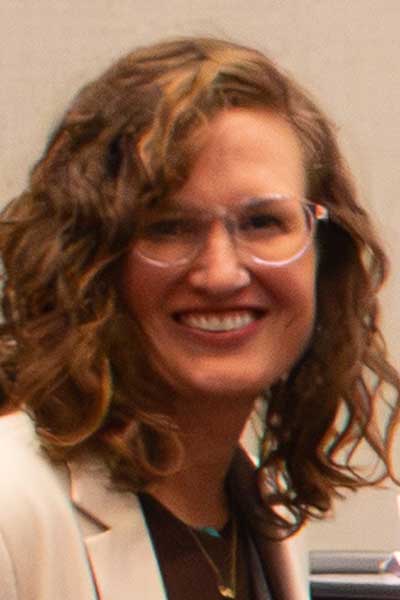
Jessica Huston, MD, Cardiologist at Ascension Saint Thomas, addressed cases where Group 2 PH looks like Group 1. Discussing the challenge of distinguishing heart failure with preserved ejection fraction (HFpEF)-associated PH from true PAH, she joked that the scenario was so common that “this is Tuesday five times over in my clinic.”
Dr. Huston emphasized that resting hemodynamics may be misleading in patients with a high probability of HFpEF and advocated for provocative testing when uncertainty remains. “A wedge with a fluid challenge of greater than 18 really kind of sends home your message that this is true HFpEF,” she said. The discussion also reinforced current evidence that “we should not be using pulmonary vasodilator therapy in the postcapillary PH population,” she noted.
Methamphetamine-associated PAH

Parth Rali, MD, FCCP, Professor of Thoracic Medicine and Surgery at Temple University, moderated the second half of the session. Lana Melendres-Groves, MD, Professor and Medical Director of the Pulmonary Hypertension Comprehensive Care Center at the University of New Mexico, discussed a patient with severe methamphetamine-associated PAH and advanced right ventricular failure.

Dr. Melendres-Groves highlighted the complexity of these cases, noting, “Every single [treatment option] could be right for an individual patient that we might see.” Rather than focusing exclusively on PH therapies, she described a multidisciplinary approach: “I’m going to diurese them, I’m going to see if I can pull them back from the brink of the cliff, and then I’m going get my addiction medicine group involved.” Dr. Melendres-Groves stressed that meaningful progress often depends on integrating addiction medicine, social work, and long-term support into PH care.
Therapy escalation

Sandeep Sahay, MD, FCCP, Associate Professor and Director of the Pulmonary Hypertension Program at Houston Methodist Hospital, presented a case of a patient with idiopathic PAH who remained at intermediate-low risk despite treatment. He emphasized that improvement alone is not enough, stating, “The patient is at intermediate risk and definitely needs more therapy.”
Dr. Sahay acknowledged that sotatercept is a promising option but stressed that treatment choices should be individualized through shared decision-making. He explained that he thinks sotatercept is definitely the preferred choice. At the same time, he reminded clinicians, “Clinical decision-making is much more complex than just the risk score,” encouraging integration of hemodynamics, imaging, symptoms, and patient preferences when considering escalation of therapy.
Portopulmonary hypertension

A final case presented by Hilary M. DuBrock, MD, Professor of Medicine and Co-Director of the PH Clinic at Mayo Clinic, focused on the diagnosis and management of portopulmonary hypertension. She emphasized that diagnosis requires more than echocardiographic findings alone, telling attendees that an elevated right ventricular systolic pressure on echocardiography was not sufficient to establish the diagnosis. Instead, she stressed and later reiterated, “You really need the complete hemodynamic picture.”
Dr. DuBrock also highlighted the unique relationship between portopulmonary hypertension and liver transplantation, describing it as “one of the very few scenarios where we can cure pulmonary hypertension.” Her presentation underscored the importance of multidisciplinary evaluation, accurate hemodynamic phenotyping, and aggressive optimization with PAH-targeted therapies to help eligible patients reach transplantation.

Call for Topics Is Open
Feeling inspired by all the great sessions you’ve attended? Help shape the curriculum for CHEST 2027, October 24 to 27 in Vancouver, by submitting topic ideas from areas you’re passionate about, topics affecting your practice, or new technologies you’d like to learn more about. The submission deadline is Tuesday, December 1, at 2 pm CT.
