





Helping a patient quit the use of tobacco and nicotine products can be a difficult process that opens significant health and quality of life improvements. But while the importance and methodology of addressing this challenge is widely recognized for adult patients, less is known about overcoming cessation challenges in youth.
During CHEST 2026, an expert panel will review the latest research and clinical case studies to better equip clinicians in tailoring effective cessation strategies for youth and young adults. The session, Tobacco Cessation in Young Adults and Adolescents: Easier Said Than Done, will take place at 4 pm MST on Sunday, October 18, in the Phoenix Convention Center.

Session Chair Sarah P. Cohen, MD, will provide a broad overview of unique differences in psychosocial care for youths. Matthew Bars, MS, will present case studies of overcoming youth resistance to tobacco cessation. Hasmeena Kathuria, MD, will explore some of the cutting-edge literature on pharmacotherapy tobacco cessation treatments for young adults and adolescents. And Frank Leone, MD, MS, FCCP, will discuss how clinicians can effectively discuss cessation with young patients.
Dr. Leone, a national authority on tobacco cessation who serves as Professor of Medicine and the Director of the Comprehensive Smoking Treatment Programs at Penn Medicine, said that a key starting point is to strike the right tone in clinical dialogue about long-term residual damage from nicotine addiction.
“As clinicians, we have this almost instinctive desperation to subvert what we know could be a slow-motion train wreck for this young person’s future,” he said. “But the more we pressure these young patients, the more the compulsive elements of the problem will arise—the flight or freeze response. It’s not unusual for an adolescent or young adult to react to pressure by just shutting down.”
An effective approach to tobacco cessation in young patients begins with recognizing which concepts apply to patients of all ages, Dr. Leone said. One of the most important is that tobacco use, combined with genetic predispositions and environmental contributions, can lead to nicotine addiction and consequential impacts to one’s health over time. In addition, breaking nicotine addiction requires a multidisciplinary approach, including pharmacotherapy and cognitive management, which addresses the underlying compulsion of the addiction and is based on leveraging a patient’s intrinsic motivations.
“The basic framework of how nicotine, particularly freebase nicotine, affects the brain is similar in youth and adult populations,” Dr. Leone said. “But in order to be more effective with their treatments, clinicians need to be aware of the context of where our young patients are in their lives and what is important to them in their adolescence.”
For adolescents, smoking, vaping, or using nicotine pouches might be ways of rebelling, asserting independence from parents, or identifying with a group, Dr. Leone noted. In these cases, clinicians may want to redefine their qualifiers of cessation success and focus on long-term goals.
For the most part, communication with youths should be forward-focused, Dr. Leone said. This can lead to frank back-and-forth discussions about how nicotine addiction might be immediately affecting their performance in academics, sports, or other activities and can help identify underlying issues of identity, independence, and security that might hinder cessation.
“That doesn’t mean we should just throw up our hands and say: ‘Well, if the kid is going vape, so be it. Have them come see me when they’re ready to quit,’” he said. “Even though our understanding of how to break nicotine addiction for youth might be in its infancy, it is still our responsibility to ruthlessly drive our knowledge forward so that we can be as effective as possible in our interventions.”
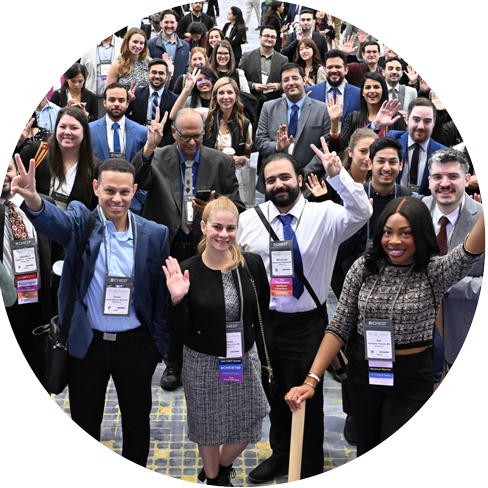
Join Us at CHEST 2026
Connect in person with influential clinicians from around the world—and attend top-tier educational sessions focusing on the most relevant clinical topics. CHEST 2026 will have it all, including optional add-on sessions to customize your learning. Reserve your spot by October 5 to save $100 with advance registration pricing.
