





Artificial intelligence (AI) is reshaping pulmonary hypertension (PH) research and care. Although AI offers powerful new capabilities, it requires rigorous validation, thoughtful implementation, and ongoing physician oversight, speakers said during the CHEST 2026 session Artificial Intelligence in Pulmonary Hypertension: Hype or Help? on Monday, October 19, in Phoenix.
Machine learning fundamentals

Session Co-Chair Marwa Oudah, MD, FCCP, Assistant Professor of Medicine at Yale School of Medicine, opened the session with an overview of AI and machine learning in clinical research, stressing that successful models begin with a meaningful clinical question rather than a sophisticated algorithm.
“What’s really important,” she said, “is what your question is and not what the model is going to do. You must have an actual research question.”
She reviewed supervised and unsupervised learning and highlighted the importance of high-quality data, sound study design, and external validation. On the topic of concerns that AI could replace physicians, Dr. Oudah emphasized that “the clinician is the center of the discussion, center of the development” and that human oversight remains essential with increasingly autonomous systems.
“More autonomy needs more oversight,” she said.
Dr. Oudah also highlighted emerging applications, including machine learning tools that identify pulmonary arterial hypertension in electronic health records, large language models that support clinical trial screening, and platforms designed to facilitate drug repurposing.
AI’s role in imaging
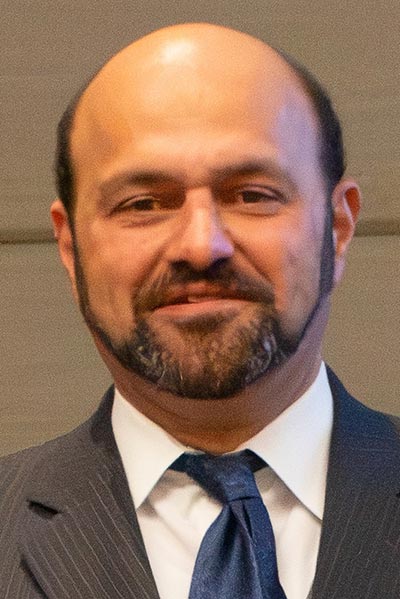
Session Chair Farbod (Nick) Rahaghi, MD, PhD, Associate Professor at the David Geffen School of Medicine at the University of California, Los Angeles, explored AI’s growing role in pulmonary vascular imaging. Drawing on work from his group, he described deep learning algorithms that automatically map pulmonary vessels and quantify abnormalities associated with PH.
Initially skeptical of AI, Dr. Rahaghi remembered thinking, “There’s no way this is going to work.” He reviewed studies showing that AI-derived imaging measurements correlate with hemodynamics, treatment response, and clinical outcomes, making them increasingly valuable in clinical trials and research. Still, he cautioned against relying on AI alone.
“Everyone makes errors,” he said. “AI makes errors, humans make errors, but it’s important to then take everything together and say, ‘OK, if we let the AI do the quantification, do we reach the same conclusions?’”
He also highlighted advances in explainable AI, noting that researchers increasingly ask, “How did you make that decision?” rather than simply accepting algorithmic outputs.
Earlier diagnosis with AI

Hilary M. DuBrock, MD, Professor of Medicine and Co-Director of the PH Clinic at Mayo Clinic, discussed delayed PH diagnosis and the potential for AI to identify patients earlier. She described how symptoms such as progressive shortness of breath and exercise intolerance are often attributed to aging, weight gain, or deconditioning, contributing to prolonged diagnostic delays.
“We really need to do better for our patients,” she said.
Dr. DuBrock reviewed evidence showing that delayed diagnosis is associated with worse outcomes and increased health care utilization. She highlighted machine learning models that detect subtle signals in electronic health records, claims data, echocardiograms, and ECGs. Particularly promising were ECG-based deep learning models that performed well in both Mayo Clinic and external cohorts. In some cases, AI-generated ECG indicators signaled disease presence years before right heart catheterization confirmed PH. She called the data “pretty amazing.”
Precision risk assessment with AI

Andrew Sweatt, MD, Staff Physician Researcher at the VA Palo Alto Health Care System, concluded the presentations by examining how AI may advance PH risk assessment beyond traditional scoring systems.
“We commonly see patients misclassified,” he said, within the model of the current risk stratification categories. “Over time we see they have different vascular biology, different RV adaptation that led to the different outcomes.”
Dr. Sweatt argued that PH is entering an era of precision medicine with modern clinical registries and networks focused on deep phenotyping. He described efforts to incorporate biomarkers, imaging, transcriptomics, physiologic monitoring, and other complex data into personalized prognostic models. He also stressed that robust AI development depends on adequate sample sizes, complete datasets, thoughtful feature selection, and external validation.
Interpretability is key, Dr. Sweatt said. Even highly accurate models may struggle to gain acceptance if clinicians cannot understand how risk predictions are generated.
As the session concluded, speakers agreed that while significant challenges remain around validation, interpretability, and implementation of AI in PH management, the potential to improve diagnosis, enhance risk assessment, and accelerate research is clear. AI is neither hype nor a replacement for clinical expertise, presenters said. Rather, it is a powerful tool that, when guided by rigorous science and physician oversight, may help advance more precise and personalized care for patients with PH.
Call for Topics Is Open
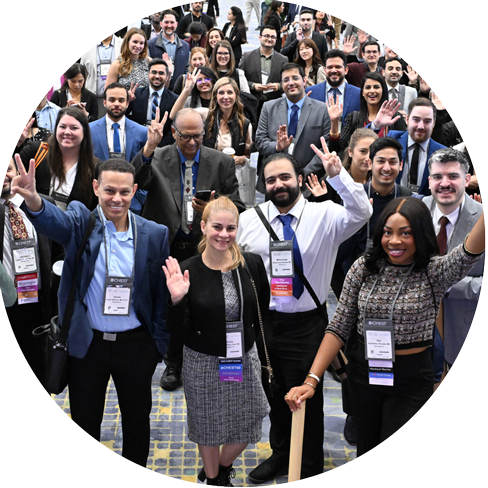
Feeling inspired by all the great sessions you’ve attended? Help shape the curriculum for CHEST 2027, October 24 to 27 in Vancouver, by submitting topic ideas from areas you’re passionate about, topics affecting your practice, or new technologies you’d like to learn more about. The submission deadline is Tuesday, December 1, at 2 pm CT.
