





Advancements in thoracic ultrasonography are transforming clinicians’ day-to-day decision-making, enabling quick and cost-effective diagnosis and treatment of patients with complex pleural effusions in diverse clinical settings.
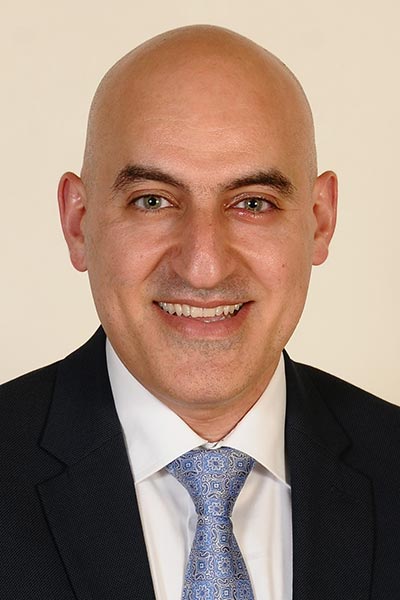
During CHEST 2026, experts will present data on these innovations, from bedside triage to the use of complex diagnostics and therapeutics, in Pleural Frontiers: Innovations in Ultrasound for Diagnosis and Intervention at 2:45 pm MST on Tuesday, October 20, in the Phoenix Convention Center. Labib G. Debiane, MD, MS, FCCP, Director of the Pleural Disease Program and Program Director of the Interventional Pulmonology Fellowship Program at Henry Ford Hospital, will chair the session.
“The main objective of this session is to provide an update to the pulmonary community of physicians on the role and practical use of pleural ultrasonography across different indications in clinical practice, as well as information on enhancing the diagnostic accuracy of bedside ultrasonography,” he said.
Dr. Debiane will discuss how thoracic ultrasound is becoming the cornerstone of modern pleural disease management. Samira Shojaee, MD, MPH, FCCP, Associate Professor at Vanderbilt University Medical Center, will present data on sonographic recognition of nonexpendable lung and postdrainage dynamics. Ekaterina Yavarovich, DO, Assistant Professor at the UTHealth Houston McGovern Medical School, will present information on the application of contrast-enhanced ultrasound. And Pyng Lee, MD, PhD, FCCP, Professor at the National University of Singapore and Director of Interventional Pulmonology at National University Hospital, will address the use of pleural ultrasonography for suspected malignancy and pleural thickening.
“These presentations are particularly important for pleural and chest clinicians because ultrasonography offers a number of significant advantages in both inpatient and outpatient settings,” Dr. Debiane said. “Ultrasound does not use ionizing radiation, making it a safe imaging modality for repeated examinations when ongoing monitoring is needed. It is also safe for use in pregnant patients, where minimizing radiation exposure is especially important.”
Modern medical ultrasonography is also fully portable and readily available, he continued, allowing clinicians to perform real-time assessments directly at the bedside in the hospital or clinic. “This point-of-care capability provides immediate diagnostic information, eliminates delays associated with transporting patients to radiology departments, and avoids the waiting time often required for image processing and interpretation,” he said.
The speakers will present data from previously published clinical trials as well as the latest research in contrast-enhanced ultrasonography, which is used to improve diagnostic accuracy of pleural lesions and better assess the complexity of pleural effusions, empyema, and peripheral chest wall masses. The session will also touch on how to improve volumetric quantification to plan safe drainage strategies and integrate elastography and artificial intelligence-assisted imaging for decision support.
“The new research will showcase data from high-evidence clinical trials to help guide clinicians on how they can substitute traditional diagnostic imaging techniques, such as chest radiography and fluoroscopy, with bedside pleural ultrasonography in recognizing the nonexpendable lung,” Dr. Debiane said.
Speakers will also highlight pleural ultrasonography case-based pearls, including practical, high-yield clinical tips, the pitfalls of this technology, and workflow optimizations.
“Because this imaging modality has now become quite practical in terms of the size and portability of the equipment and in its safety profile,” Dr. Debiane said, “it is important for clinicians to learn how much this new technology can benefit patients and help physicians in their diagnostic and treatment decision-making.”
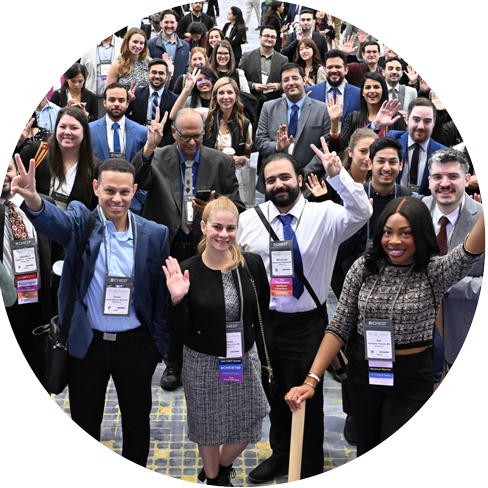
Join Us at CHEST 2026
Connect in person with influential clinicians from around the world—and attend top-tier educational sessions focusing on the most relevant clinical topics. CHEST 2026 will have it all, including optional add-on sessions to customize your learning.
