

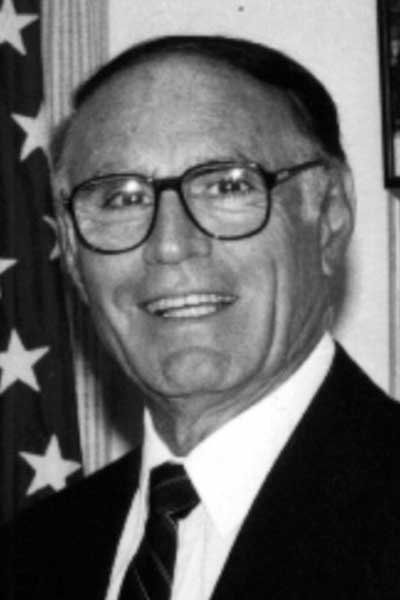
On November 19, 2025, the CHEST community lost a monumental leader and great physician, Alfred Soffer, MD, Master FCCP. A renowned expert in cardiopulmonary medicine, Dr. Soffer, 103, served as Editor in Chief of the journal CHEST® for 25 years from 1968 to 1993 and led CHEST as its Executive Director for 23 years from 1969 to 1992. He earned the distinction of Master Fellow of the College of Chest Physicians in 1992 and was named CHEST’s first “Giant in Chest Medicine” in 2013. (Watch an interview with Dr. Soffer.) His efforts have had a profound impact on the organization and on the journal.
During his leadership, CHEST transitioned from an organization founded in 1935 by Murray Kornfeld, who was a patient with TB, to an international organization of more than 18,000 chest physicians—pulmonologists, cardiologists, chest surgeons, and critical care physicians—in more than 100 countries. The annual scientific meeting, the international meetings, and the continuing medical education courses drew physicians and scientists from multiple disciplines that treat patients with chest diseases, including pediatrics, anesthesiology, allergy, pharmacy, and hematology. CHEST became the international leader in clinical pulmonary education programs.
Under Dr. Soffer’s leadership, the organization helped to educate the public about chest diseases, and it became the international leader in the campaign to reduce the prevalence of smoking.
During his tenure, CHEST was one of the first medical organizations to convene expert conferences that produced evidence-based practice guidelines published in CHEST or as supplements to CHEST. These guidelines have been widely accepted and have improved the quality of care for patients with pulmonary disease throughout the world.
When the journal was first published as Diseases of the Chest in 1935 under the sponsorship of the Federation of American Sanatoria (now CHEST), its goal was “to be of material aid to the general practitioner in dealing with his tuberculosis patients.” In 1970, Dr. Soffer led the name change of the journal to CHEST and refocused its mission to serve all pulmonary diseases and critical care.
He introduced peer review to the journal, and when he turned over the editorship to the late Jay Block, MD, Master FCCP, the journal had more than 8,000 peer reviewers. As CHEST became the premier clinical pulmonary journal, the number of manuscripts submitted to CHEST per year increased 700% from 300 in 1967 to 2,400 in 1993.
When asked in 2009 what made the journal so successful, Dr. Soffer said:
“During my tenure, I also ensured that every article we published was the best it could possibly be. Upon submission, the majority of articles would undergo at least one revision, incorporating suggestions from the editorial board, the editor, and out-of-office consultants. In most cases, these suggestions were welcomed by the authors and helped make the articles much stronger and, thus, strengthening the image of the journal.”
In addition to his positions at CHEST, he served as Editor of the American Medical Association’s Archives of Internal Medicine from 1976 until 1986 and founded Heart & Lung: The Journal of Cardiopulmonary and Acute Care.
Part of Dr. Soffer’s success as a leader was his outgoing personality and enthusiasm. At every annual meeting, he made it a point to meet with as many attendees as he could (especially the youngest attendees) and welcome them to CHEST. Many of the young attendees who became active members and leaders of CHEST did so because Dr. Soffer welcomed them into the fold.
Dr. Soffer’s years as Editor in Chief of CHEST and Executive Director had a major impact on graduate medical education and the quality of care for patients with pulmonary diseases throughout the United States and the world. His legacy is honored yearly at the CHEST Annual Meeting through the Alfred Soffer Award for Editorial Excellence, which goes to someone who has made significant contributions to CHEST. Recipients are often world experts in their fields, have written numerous papers and abstracts, have served as primary investigators, and/or have served as a department editor of CHEST.
Beyond CHEST, Dr. Soffer left a mark far surpassing his career. He was an authority on Jewish medical ethics and the works of Maimonides, and he lectured extensively on both subjects. He was a founding president of Solomon Schechter Day School in Northbrook, Illinois; served as Chief Medical Scientist for the State of Israel from 1973 to 1974; and, accompanied by an armed guard, visited Gaza during the Yom Kippur War to teach local physicians cardiology and internal medicine. Dr. Soffer was also an avid fisherman, skilled golfer, and nationally ranked tennis player who competed well into his 80s. Dr. Soffer was a beloved husband to the late Isabel Soffer. He is survived by his children—Jonathan (Margaret) Soffer, Joshua, and Gil (Becky) Soffer—and grandchildren—Talia (Daniel), Jacob, Gabriela, and Mia Soffer.
Richard Irwin, MD, Master FCCP, is widely recognized for a career that helped define best practice guidelines for managing cough. When he reflects on where it all began, it starts with an opportunity from the late Dr. Soffer.
In 1976, Dr. Irwin was an Assistant Professor of Medicine at Brown School of Medicine, based at Rhode Island Hospital, when a then-third-year medical student, Mark Rosen, MD, Master FCCP, arrived looking for a short-term research project. Dr. Irwin already had an interest in cough and saw a gap in the medical literature.
“One of the things I wanted to do was write a review article to see everything that we know about cough,” Dr. Irwin said, because “there really wasn’t a systematic way of actually approaching it.”
Dr. Rosen returned from the library with what Dr. Irwin described as “a shoebox filled with 3-by-5 cards,” and together they organized the topic into a practical framework. The result was a review article Dr. Irwin credits as the beginning of the modern era of managing cough.
Then came the setbacks. “We sent it to 10 journals, and it gets rejected by 10, at which point I’m ready to give up,” Dr. Irwin recalled.
That was when he decided to call Dr. Soffer. He had been told Dr. Soffer was reachable and very helpful, especially to young academicians. Dr. Soffer was already Executive Director of CHEST and the Editor in Chief of the journal CHEST. Still, Dr. Irwin left a message seeking advice.
Dr. Soffer’s response was immediate and personal. “He calls me back the next day,” Dr. Irwin said, even though he “doesn’t know me from Adam.” Dr. Soffer had said, “Send it to me and I’ll tell you what my thoughts are.”
After reading the manuscript, Dr. Soffer called again with encouragement that changed Dr. Irwin’s future: “Phenomenal,” he said. “It needs to be published.” He suggested that Dr. Irwin make a few changes and, “because CHEST doesn’t publish large review articles,” to send it to him in six months when he would also become the Editor of Archives of Internal Medicine.
One year later, in 1977, Dr. Soffer published the review, coauthored by Dr. Irwin, Dr. Rosen, and Sidney Braman, MD, Master FCCP, in the Archives—a moment Dr. Irwin said “basically started the research that I spent the next 50 years” pursuing in cough.
What endured most was not only the publication but the example. Dr. Soffer was so kind, Dr. Irwin said, that when he later became Editor in Chief of the journal CHEST himself, he made it a point to try to return calls, especially from young investigators.
Dr. Soffer gave a budding physician a chance, answered quickly, and helped spark a career that would shape a field. Dr. Irwin never forgot the call that changed everything.