
SPONSORED CONTENT
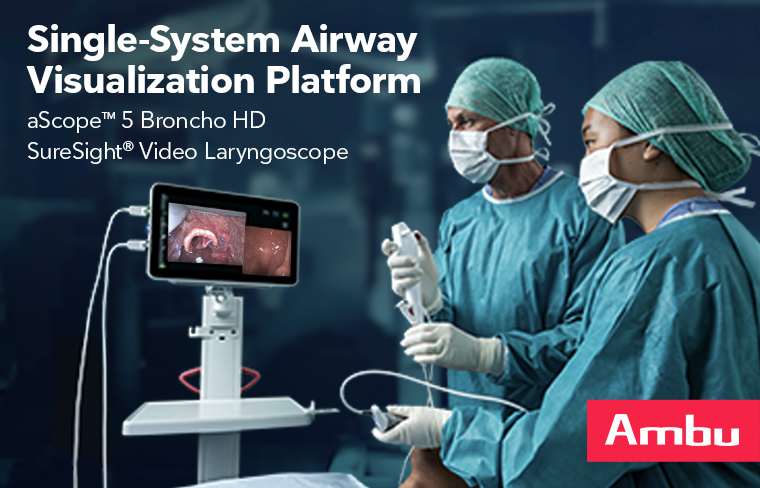
The Rise of the Single-System Airway Visualization Platform in the ICU
Airway management in the ICU has fundamentally changed. What began as a direct laryngoscopy-driven practice has shifted toward visualization-based care, driven by video laryngoscopy, disposable bronchoscopes, and compact imaging platforms that have become essential tools for today’s critical care teams.
But technology adoption alone hasn’t solved every problem. Many ICUs still operate with fragmented airway platforms—devices that address individual procedural needs but were never designed to work together.
The Cost of Fragmentation
The consequences are real. Separate displays, incompatible interfaces, and inconsistent device availability slow teams down across the full range of ICU airway procedures.
The risk is significant enough to surface in recent practice guidelines, which suggest that unified platforms may better support procedural preparedness across a broader range of clinical scenarios.
The inefficiencies compound across three dimensions:
- Workflow—setup time, device switching, and troubleshooting interrupt clinical momentum
- Standardization—inconsistent interfaces increase training burden and setup errors
- Patient care—delayed visualization access can postpone intervention in time-sensitive situations
What Modern ICU Airway Management Actually Requires
Today’s clinicians transition rapidly between diagnostic bronchoscopy, therapeutic intervention, and airway troubleshooting—sometimes within a single patient encounter. A disjointed airway visualization system makes that harder.
A single-system platform makes it seamless.
The Case for Integration
Consolidating video laryngoscopy, flexible bronchoscopy, and advanced airway intervention into one platform delivers advantages across the care team:
- Standardized interfaces reduce training burden and setup errors
- Consistent device availability improves preparedness for high-acuity events
- Seamless transitions support earlier intervention and fewer interruptions
- Reduced equipment redundancy lowers complexity for supply chain and clinical leadership
Built for How Modern ICUs Must Operate
The shift toward integrated single-system airway platforms isn’t a technology trend. It reflects a broader evolution in critical care, built around responsiveness, adaptability, and the realities of complex airway management.
For critical care teams evaluating their airway management strategy, the question is no longer whether a single-system platform for airway visualization matters. It’s whether their current setup is built for it.
Explore How a Single-System Airway Visualization Platform Can Support Your ICU Workflow
