
The overwhelming pressures of health care access, cost, reimbursement, and staffing made apparent during the outbreak of the COVID-19 pandemic have transformed the current health care climate. It has evolved to include advanced practice providers (APPs) in a multitude of settings. The implementation has led to numerous benefits including cost reduction, increased patient access, and improved patient satisfaction.1 With a collaborative relationship and supportive leadership, APPs can not only gain expertise but also help establish and grow subspecialty clinics.2
Identify a need
One such specialty facility is the Cleveland Clinic Restrictive Thoracic Disorders Clinic, which allows us to focus on diaphragm dysfunction (DD). DD is often underrecognized and may be evaluated using a variety of assessment methods.3 The condition may arise from underlying neuromuscular disease, late-stage obstructive lung disease, invasive surgical procedures, traumatic injury, prolonged hospitalization—with or without mechanical ventilation—or even cervical chiropractic manipulation.4 Patient symptoms can be varied, with intensity ranging from milder positional intolerance to acute symptoms with life-threatening implications.
Patients with DD often present with reports of unexplained dyspnea, dyspnea on exertion, orthopnea, bendopnea, trepopnea, postprandial dyspnea, difficulty front-loading vs side-loading weight, trouble when submerged in water, or alterations to cough/sneeze strength.5 In acute-onset DD, identifying the initiation of symptoms is vital. With iatrogenic or transient nerve palsy, such as in neuralgic amyotrophy, there can be spontaneous recovery with a time window extending to two years in some cases.
Pulmonary physicians and APPs can be instrumental in streamlining the assessment and management process for these patients. Though it is uncommon for institutions to have dedicated diaphragm-specific clinics for patients with DD, APPs can help fill the void to support these subspecialty clinics as they gain the appropriate training through both didactic and physician/APP-based mentorship pathways.
DD Assessment
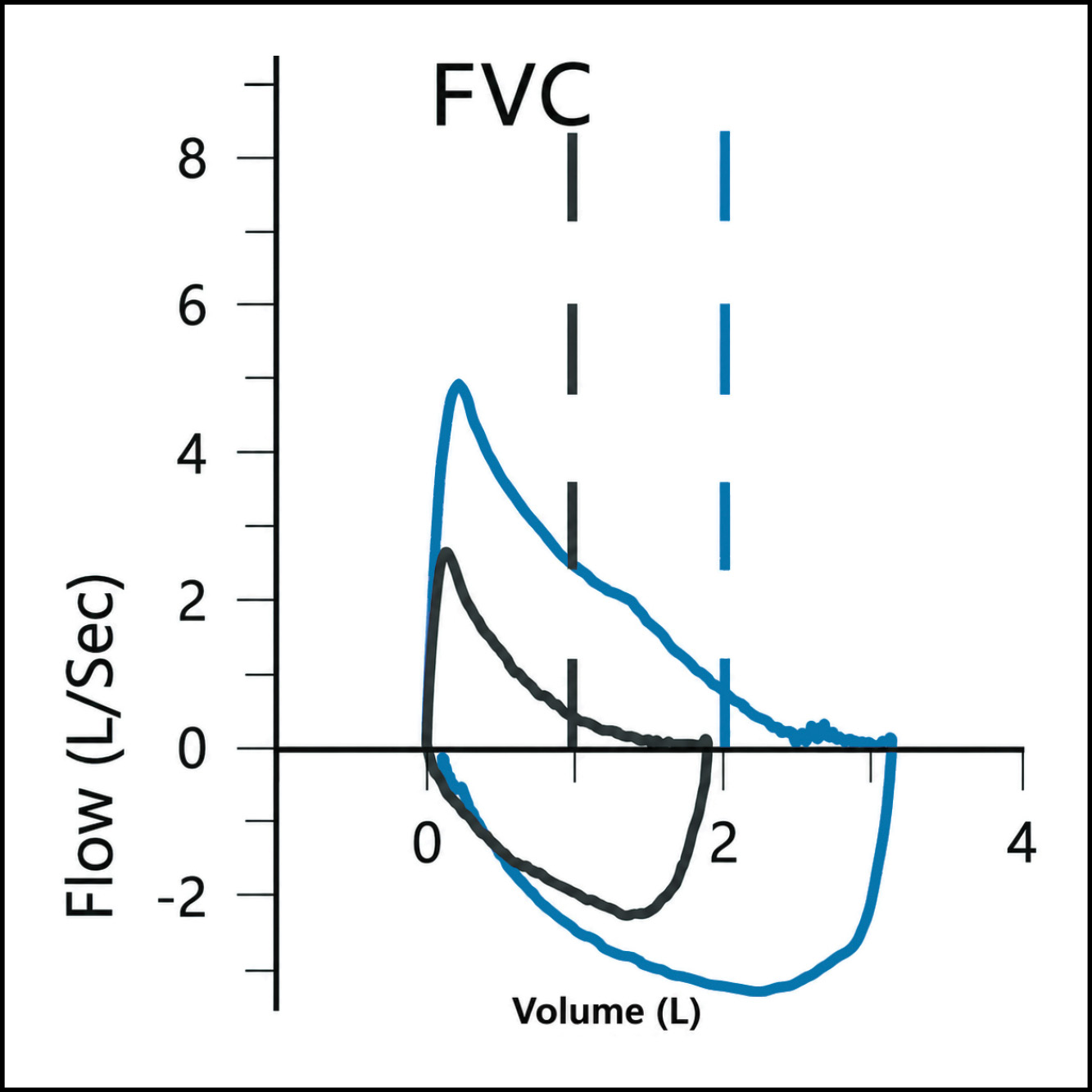
Spirometry is the cornerstone of the assessment process in patients with suspected DD. Sitting-to-supine spirometry and maximal inspiratory pressure (MIP) testing are the two most common tests. While total lung capacity is often reduced in patients with bilateral dysfunction, vital capacity with the sit-to-supine transfer may be a more reliable measure in patients with unilateral dysfunction.5 These tests not only serve as qualifying measures for noninvasive ventilation (NIV) support but also challenge the diaphragm to quantify the degree of weakness. A loss in FVC of greater than 20% in the supine position can be used as an indicator of diaphragm weakness.5 An MIP > -60 cm H2O can raise the suspicion for nocturnal hypoventilation as muscle atonia occurs.
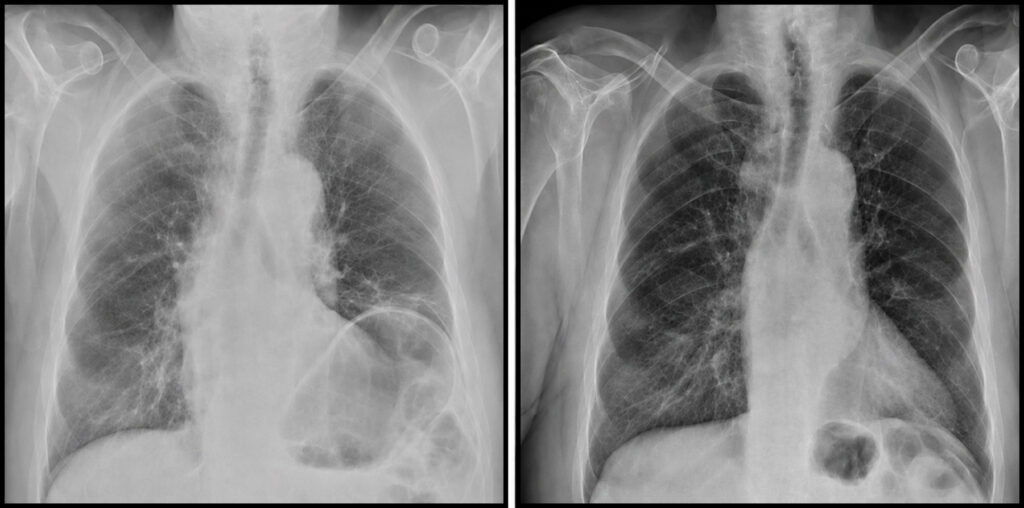
Chest X-ray is also a frequently used diagnostic tool to assess diaphragm dysfunction, and often, the incidental finding of an elevated hemidiaphragm triggers the pulmonary evaluation.4 In addition to chest X-ray, other diagnostic methods that clinicians can use to build the diagnosis of DD include sniff fluoroscopy, electromyography, and phrenic nerve conduction studies. While these diagnostic methods are validated, their sensitivity and specificity are limited when compared with methods like diaphragm ultrasound.6
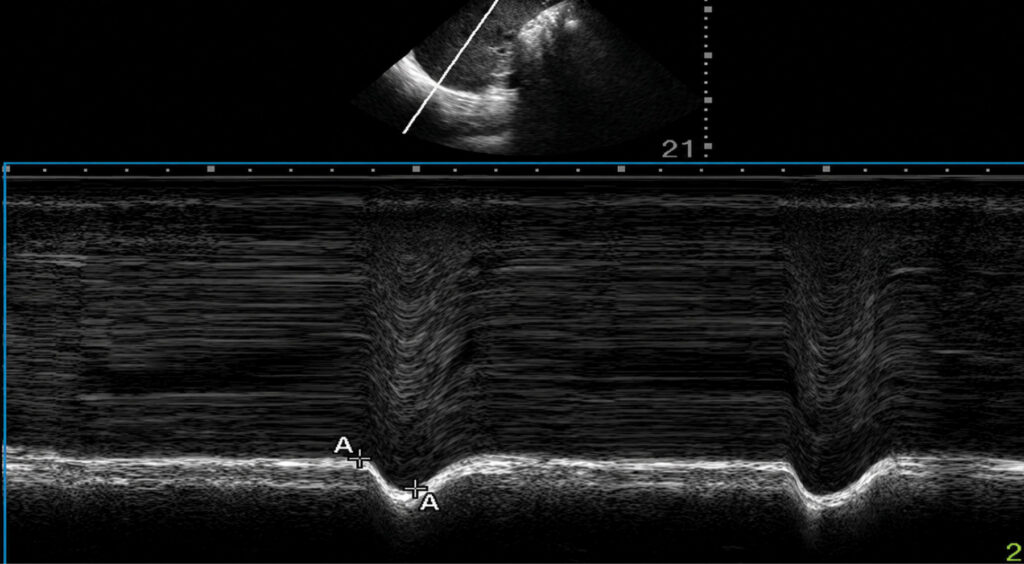
Lastly, point-of-care ultrasound (POCUS) is a useful tool that has multiple benefits when compared with other diagnostic methods when considering cost, ionizing radiation, ability to repeat, real-time assessment, and enhanced understanding for the patient. While many physicians receive training with diagnostic ultrasound during their residency and fellowship, diaphragm ultrasound remains a niche exam with limited implementation on a large-scale basis. Specially trained APPs can bridge the gap that exists surrounding outpatient POCUS assessment of DD.
DD can be treated conservatively with weight loss, positional therapy, or respiratory muscle training. Patients with an FVC <50% predicted, an MIP > -60 cm H₂O, a Paco₂ ≥45 mm Hg, or nocturnal oxygen desaturation to ≤88% for ≥5 minutes may benefit from NIV support.7 Diaphragm pacing and surgical plication are options for managing DD. Surgical plication should not be considered prior to one year.4 Plication should be reserved for unilateral diaphragm paralysis. Diaphragm pacing is most effective for patients with high-level spinal cord injury, but it has been used during the observation period for temporary paralysis.4 Diaphragm pacing and surgical plication are available options for patients who do not have spontaneous recovery.
Training, mentorship, growth
As for my experience, I received initial training at the CHEST Annual Meeting. Following that specialized didactic training, physicians within our institution provided continuing mentorship to further grow my knowledge and skill. The use of POCUS has helped our team better diagnose, monitor, and educate patients presenting with DD. This has expanded the reach of our subspecialty clinic through referrals from both within our institution and outside institutions. POCUS assessments have increased to include all pretransplant patients, posttransplant assessment of patients with prolonged mechanical ventilation, cardiothoracic surgical patients with complications, autoimmune-mediated lung disease, and multiple upcoming funded studies. Performing diaphragm ultrasounds has become an essential component of our institution’s approach to caring for highly complex medical and surgical cases.
Our institution’s guiding principle has always been “patients first,” and we are able to strive toward this goal because of the supportive leadership and dedication to framing health care models that put patients at the center. Our rapid growth has been made possible because of the close collaborative relationship between physicians and APPs within our institution. With an ever-changing health care environment, I hope that the bond between APPs and physicians continues to strengthen with our shared goal to provide high-quality care for our patients.
This article was originally published in the Fall 2026 issue of CHEST Physician.
References
1. Hollenbeck BK, Kaufman SR, Oerline M, et al. Effects of advanced practice providers on single-specialty surgical practice. Ann Surg. 2023;277(1):e40-e45. doi:10.1097/SLA.0000000000004846
2. Schesser M, Naderi S, Fananapazir G. Utilizing advanced practice providers in the paracentesis/thoracentesis clinic. Abdom Radiol (NY). 2022;47(8):2712-2716. doi:10.1007/s00261-022-03469-6
3. Boon AJ, Harper CJ, Ghahfarokhi LS, Strommen JA, Watson JC, Sorenson EJ. Two-dimensional ultrasound imaging of the diaphragm: quantitative values in normal subjects. Muscle Nerve. 2013;47(6):884-889. doi:10.1002/mus.23702
4. McCool FD, Tzelepis GE. Dysfunction of the diaphragm. N Engl J Med. 2012;366(10):932-942. doi:10.1056/NEJMra1007236
5. Minami T, Manzoor K, McCool FD. Assessing diaphragm function in chest wall and neuromuscular diseases. Clin Chest Med. 2018;39(2):335-344. doi:10.1016/j.ccm.2018.01.013
6. Boon AJ, Sekiguchi H, Harper CJ, et al. Sensitivity and specificity of diagnostic ultrasound in the diagnosis of phrenic neuropathy. Neurology. 2014;83(14):1264-1270. doi:10.1212/WNL.0000000000000841
7. Hannan LM, De Losa R, Romeo N, Muruganandan S. Diaphragm dysfunction: a comprehensive review from diagnosis to management. Intern Med J. 2022;52(12):2034-2045. doi:10.1111/imj.15491
