

Federal policy often comes to mind when considering ways to improve air quality and safeguard respiratory health. But smaller steps at the community level can have some of the biggest impacts.
Panelists discussed how clinicians can lend their voices to these efforts during the CHEST 2025 session Climate and Clean Air Action Local Approaches: From Schools to Statehouses on Wednesday, October 22, in Chicago.
State and local policy
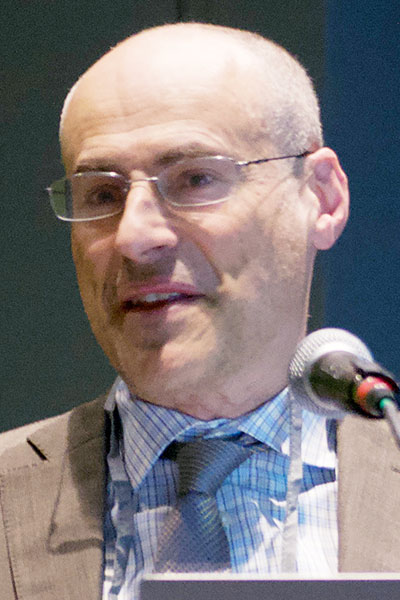
Anthony Gerber, MD, PhD, Professor of Medicine at National Jewish Health, addressed the United States’ clean air regulatory hierarchy.
While the Clean Air Act is the foundation of US air quality regulations, it primarily regulates what are referred to as “criteria pollutants”—ozone, particulate matter, carbon monoxide, lead, sulfur dioxide, and nitrogen dioxide. Regional air commissions and state and local lawmakers have significant latitude to augment or exceed federal guidelines, Dr. Gerber said.
“There’s a lot of opportunity there to change policy in a really profound way,” he said.
Dr. Gerber emphasized the importance of always following the science in state and local advocacy. A bad smell or impassioned anecdotes don’t necessarily mean the data will support a connection to adverse health effects; however, when there is scientific justification, advocacy is best received when it focuses first and foremost on objective health effects and quality of life, he said.
Climate factors in cities
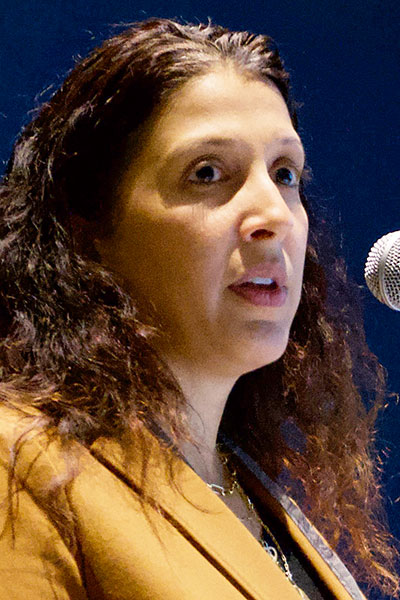
Sharmilee M. Nyenhuis, MD, Professor and Vice Chair of Health Outcomes, Advocacy and Community Health in the Department of Pediatrics at the University of Chicago, highlighted urban climate factors and community interventions.
Dr. Nyenhuis conducted focus groups aimed at understanding how minoritized patients with asthma perceived the impacts of climate change on their condition.
“One of the participants said that they have to adjust their lifestyle and work during the summer, specifically to stay indoors and be in the air conditioning because of some of the extreme heat,” Dr. Nyenhuis said.
She highlighted the need for clinicians to understand community resources and resilience factors, enabling them to provide advice and solutions that patients can realistically access. Clinicians can empower patients to monitor air quality and minimize exposure, and they can also work with communities to influence policy, she said.
Clean energy in counties
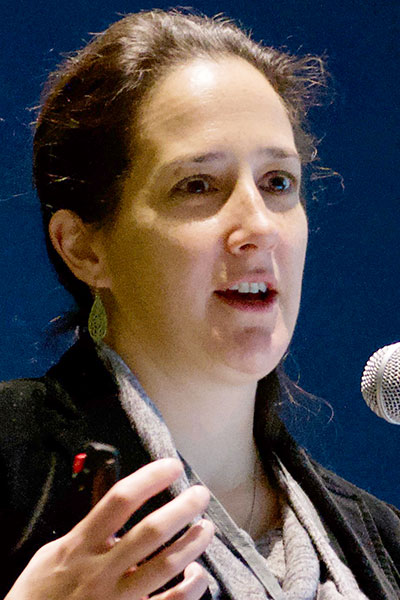
Erika Mosesón, MD, MA, FCCP, Pulmonary and Critical Care Physician with Legacy Medical Group, stressed that clinicians can advocate for clean energy at the county level, since they understand their communities and the challenges their patients encounter.
“A lot of our policy related to where we live and spend 90% of our time is actually settled by your county and your city,” Dr. Mosesón said.
Home heating is one area where cleaner energy can lead to cleaner air, she said, noting that wood-burning fireplaces can be a significant source of fine particle emissions within homes. One study showed that replacing a gas boiler with a heat pump was found to reduce overall energy costs by 40% and carbon dioxide emissions by 70% over the lifespan of the equipment.
Dr. Mosesón also pointed to gas-powered lawn equipment, citing a study that found that leaf blowers generated 23 times the amount of carbon monoxide and 300 times the amount of hydrocarbons compared with a crew-cab pickup truck. Many cities and counties have instituted bans—targeting not only emissions but also noise—and have incentivized replacement with electric alternatives through grants and rebate programs.
Clean air in schools
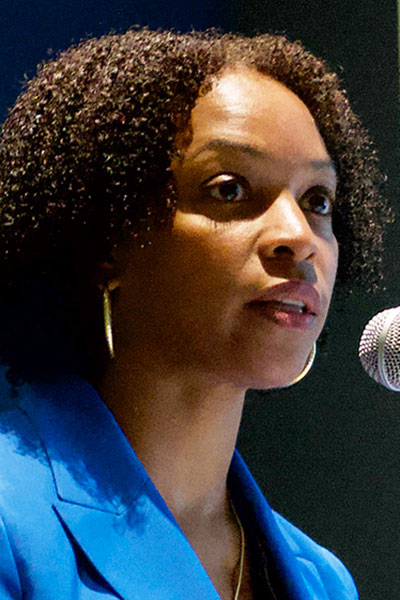
Stephanie Lovinsky-Desir, MD, MS, Associate Professor of Pediatrics in Environmental Health Sciencesat Columbia University Medical Center, discussed the health effects and mitigation of school-based pollutant exposures.
More than 6.4 million students in the United States attend schools within 250 meters of a major highway, Dr. Lovinsky-Desir said. These children spend up to 1,000 hours a year in schools, and long-term exposure to air pollution can impair lung growth, she said.
Recent efforts have attempted to improve conditions for these children. The US Environmental Protection Agency’s Clean School Bus Program aimed to accelerate the replacement of older, high-emitting school buses with zero-emission or low-emission alternatives. The Department of Education’s Renew America’s Schools Program was established to help schools make upgrades that reduce energy use and costs and improve indoor air quality.
“It’s important to acknowledge that there’s still a lot of work to be done in this space,” Dr. Lovinsky-Desir said. “I think there’s a major concern that the school districts that need these funds may not be the ones that have the resources to apply for them. So more attention is definitely needed for supporting the most disadvantaged communities.”
Call for Topics Is Open
Feeling inspired by all the great sessions in Chicago? Help shape the curriculum for CHEST 2026, October 18 to 21 in Phoenix, by submitting topic ideas from areas you’re passionate about, topics affecting your practice, or new technologies you’d like to learn more about. The submission deadline is Tuesday, December 2, at 2 pm CT.