
Obstructive Lung Disease
-

COURSE trial shows importance of biomarker testing in COPD
While overall the trial was negative, Meilan King Han, MD, MS, and Sanjay Ramakrishnan, MBBS, PhD, said it demonstrated the promise of tezepelumab for patients with baseline blood eosinophil counts ≥ 150 cells/µL.
-

Dupilumab reverses airway inflammation, mucus hypersecretion in type 2 asthma
Lead author Mario Castro, MD, MPH, FCCP, said the VESTIGE trial is one of the first to show that we can reverse the disease process in asthma and substantially improve lung function.
-

Hope on the horizon for bronchiectasis
The combination of personalized therapies, novel and repurposed medications, and a multidisciplinary approach is transforming bronchiectasis from a condition that once had few treatment options into one that offers hope for improved management and even disease stabilization.
-

CMS decision positively impacts the future of home ventilation coverage
CMS recently released a decision on coverage for noninvasive ventilation devices for patients with COPD, a process that CHEST has been closely involved in.
-

For the neuromuscular disease community, ventilation coverage victory doesn’t carry over
Patient advocate Spero Koulouras said he believes CMS home ventilation coverage criteria for patients with disorders such as ALS are still ambiguous enough that private insurers have interpreted them to deny and delay coverage.
-

SWIFT studies show promise of IL-5-targeted twice-yearly option for severe asthma with an eosinophilic phenotype
Lauren E. Eggert, MD, said depemokimab could be a more convenient therapy choice for both patients and providers.
-

Advancements in pediatric airway evaluation
Pediatric airway anatomy evaluation continues to evolve with the development of newer technologies such as dynamic volumetric CT scans.
-

Brensocatib awaits FDA approval for bronchiectasis following ASPEN results
Experts Mark Metersky, MD, FCCP; Pamela J. McShane, MD; and Charles L. Daley, MD, FCCP, discuss the potential clinical implications of addressing inflammation in bronchiectasis—from reduced exacerbations and slowed decline in FEV to improved quality of life.
-

MATINEE shows positive results for mepolizumab in COPD
Experts Frank Sciurba, MD, FCCP, and Gerard J. Criner, MD, FCCP, said clinicians have a second option for treating patients with high type 2 inflammation now that the FDA has approved the drug for those with an eosinophilic phenotype.
-

Study to test efficacy of tezepelumab for treating asthma exacerbations in the emergency department
Diego J. Maselli, MD, FCCP, said the TERAA trial will provide needed evidence on the use of biologics in the acute care setting.
-

Tezepelumab trial demonstrates solid results for treatment of CRSwNP
Joseph K. Han, MD, said the data showed the highest change in sinonasal outcome test scores from baseline compared with any other biologic studies for chronic rhinosinusitis with nasal polyps.
-
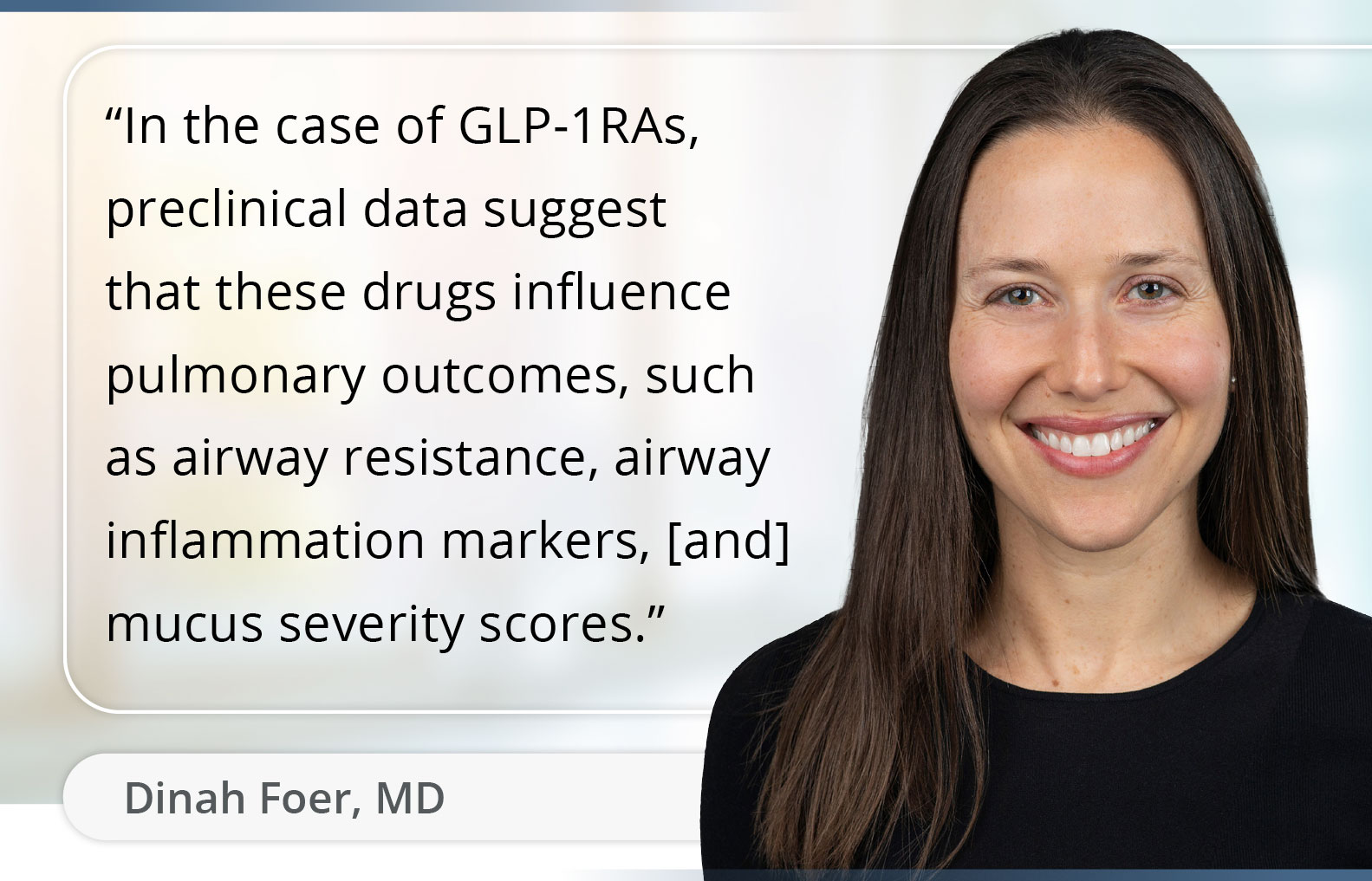
COPD: Could there be a GLP-1 for that?
While real-world data are promising, experts Dinah Foer, MD, and William B. Feldman, MD, say more randomized controlled trials are needed to confirm whether antihyperglycemic medications can improve respiratory outcomes in patients with comorbid type 2 diabetes and COPD.
