
Chest Infections
-

Fire preparedness—and what we can learn from the great Los Angeles fires of 2025
In the wake of the fires that ravaged Los Angeles County, take this opportunity to review fire preparedness and know what to do before, during, and after a devastating wildfire.
-

FDA grants clearance for SIMEOX 200 for patients with chronic lung disease
The approval offers providers an alternative to traditional airway clearance therapies for patients with chronic lung diseases such as bronchiectasis, COPD, and cystic fibrosis.
-

From decline to resurgence: Rise and response to US and global TB burden
TB prevalence has been rising since 2019, driven by reduced precautions and conflicts, though shorter treatments and strategic plans offer hope for elimination.
-
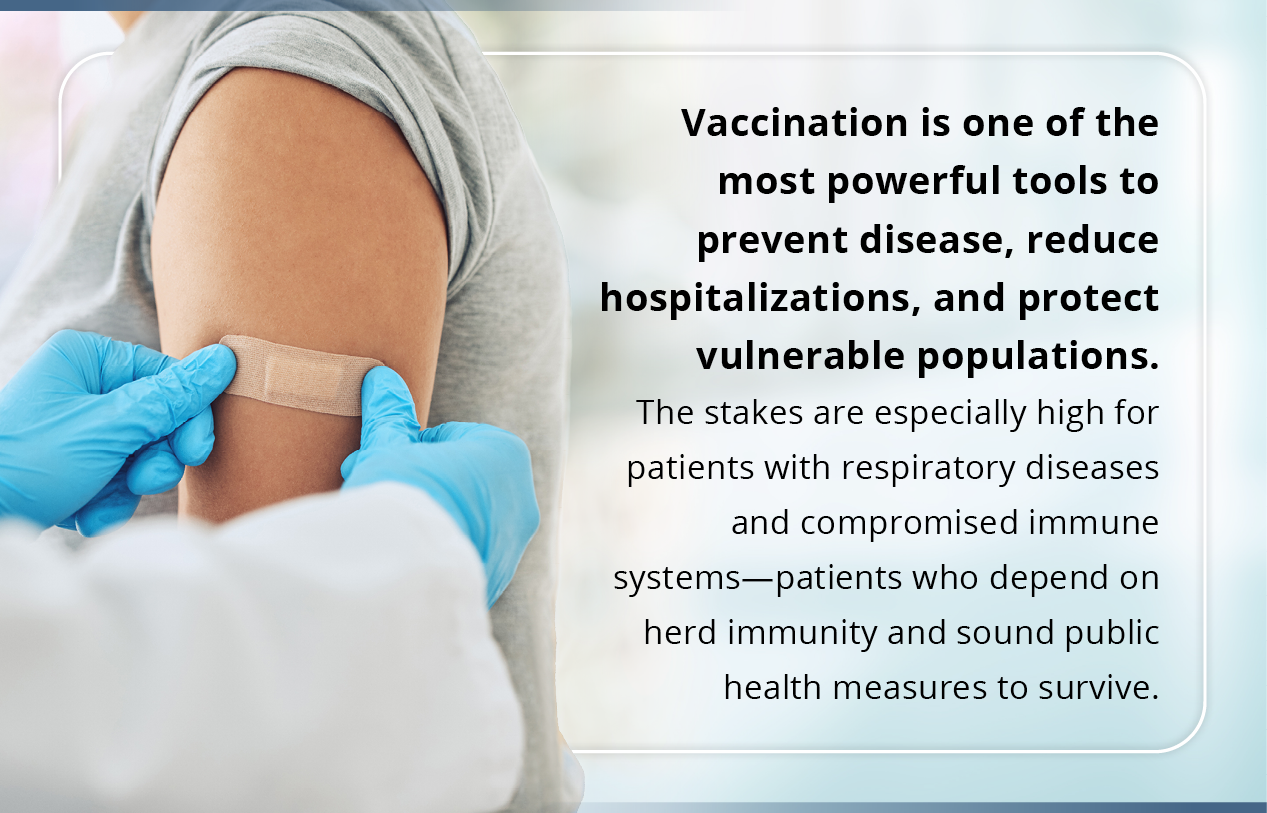
Supporting vaccinations in the name of public health
CHEST supports the fundamental responsibility of a public health system to seek out and apply evidence-based medicine in the development of sound policies essential to preventing illness.
-

Mitigating risk of asthma emergencies during respiratory season
During flu season, asthma emergencies become a heightened concern, especially among children. Proactive measures including vaccination, updated asthma action plans, and access to quick relief medications are critical.
-

Pseudomonas infection in patients with noncystic fibrosis bronchiectasis
Pseudomonas aeruginosa is a clinically important organism that infects patients with noncystic fibrosis bronchiectasis (NCFB). In the United States, the estimated prevalence of NCFB is 213 per 100,000 across all age groups and 813 per 100,000 in the over 65 age group.1 A retrospective cohort study suggests the incidence of NCFB as ascertained from International…
-

Bronchiectasis: A call to action
Bronchiectasis is an extremely heterogeneous airways disease, making it difficult to study. For years, the noncystic fibrosis (CF) bronchiectasis community has been trying to organize to provide better care for more than half a million adults with bronchiectasis in the United States. Internationally, the Europeans created the European Bronchiectasis Registry, which has been a powerful…
-

Trauma epidemiology and the organization of trauma care in the US
Patients who are injured do better when treated at trauma centers. During CHEST 2023 in Honolulu last year, the Disaster Response and Global Health Section hosted a presentation to a packed audience highlighting the history of the trauma model system in America. Attendees learned about the emergence of trauma systems in the US and the…
-

Fellow to use diversity scholar mentorship to strengthen care in pediatric-to-adult transitions
During residency training at the Rush University Medical Center in Internal Medicine and Pediatrics, Esha Kapania, MD, quickly became interested in the pulmonary pathologies that span the life of a patient, beginning in childhood and lasting into adulthood. Now in her first year of fellowship at the University of Louisville and as the recipient of…
-

Can VAP be prevented? New data suggest so
Ventilator-associated pneumonia (VAP) is a common cause of hospital-related morbidity in critically ill patients. The efficacy of prophylactic antibiotics in the prevention of VAP has been the subject of several studies in recent years. Three large randomized controlled trials, all published since late 2022, have investigated whether antibiotics can prevent VAP and the optimal method…
-

Eradicating uncertainty: A review of Pseudomonas aeruginosa eradication in bronchiectasis
Bronchiectasis patients have dilated airways that are often colonized with bacteria, resulting in a vicious cycle of airway inflammation and progressive dilation. Pseudomonas aeruginosa is a frequent airway colonizer and is associated with increased morbidity and mortality in cystic fibrosis (CF) and noncystic fibrosis bronchiectasis (NCFB).1 Both CF and NCFB guidelines recommend eradication of P.…
-

Management of severe respiratory viruses in 2024
Viral infections frequently cause acute respiratory failure requiring ICU admission. In the United States, influenza causes over 50,000 deaths annually and SARS-CoV2 resulted in 170,000 hospitalizations in December 2023 alone.1 2 RSV lacks precise incidence data due to inconsistent testing but is increasingly implicated in respiratory failure. Patients with underlying pulmonary comorbidities are at increased…
