
News
-
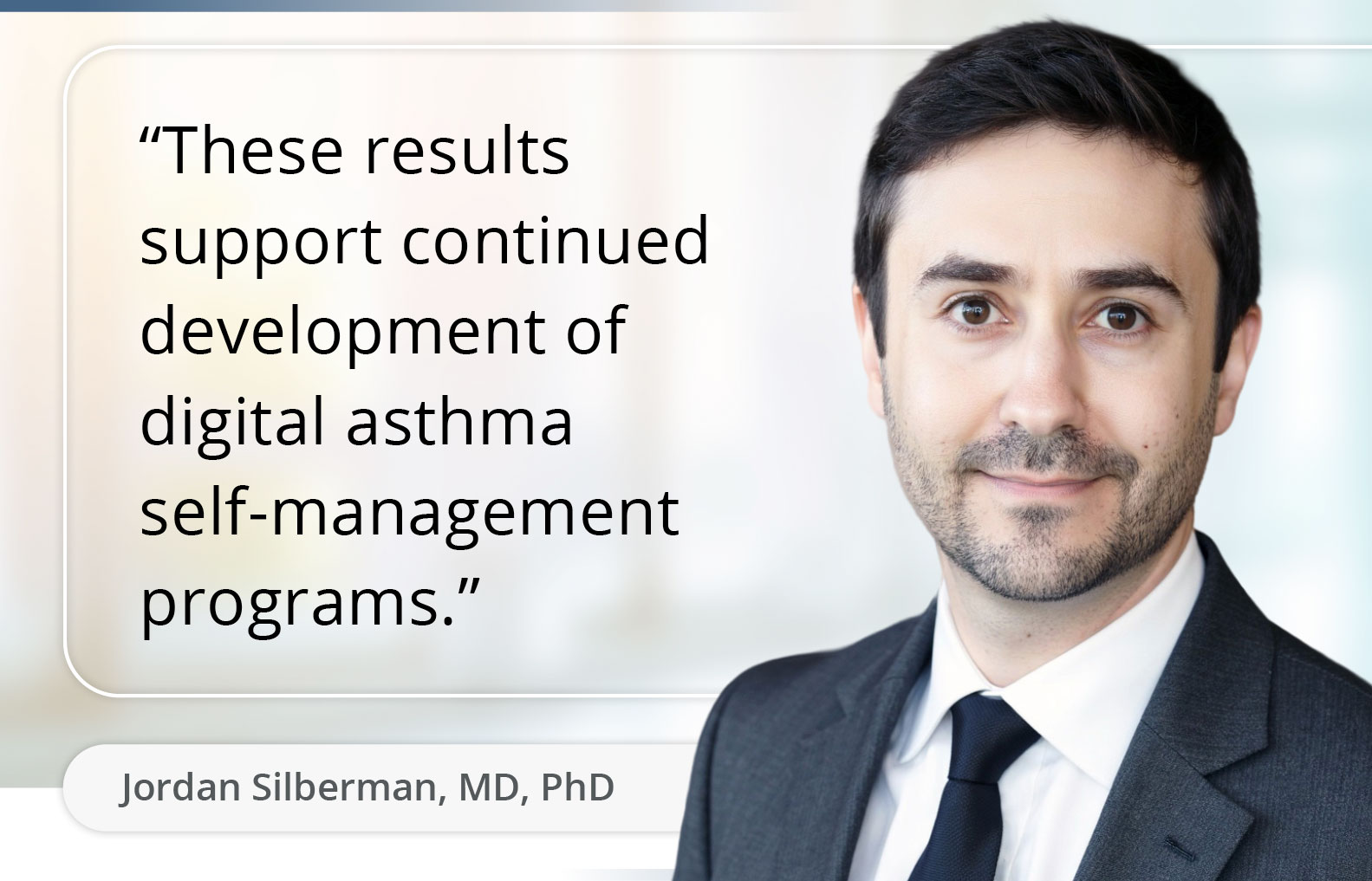
Asthma self-management app beats usual care for asthma control
Researcher Jordan Silberman, MD, PhD, said the findings—which varied by race—underscore the need for culturally adaptive strategies to ensure equitable engagement across all populations.
-

Study identifies key environmental exposures associated with risk of interstitial lung disease
Bradford C. Bemiss, MD, MSc, said the findings underscore the importance of asking patients about potential workplace inhalation exposures.
-

Study shows nurse-led family support reduces adverse outcomes, improves ICU satisfaction
Timothy Kinsey, DMSc, PA-C, FCCP, said recent findings offer a strategy for mitigating long-term harm for families of patients who are critically ill.
-

Nerandomilast opens the door for potential monotherapy, add-on therapy for pulmonary fibrosis
Positive results from the FIBRONEER trials of nerandomilast in IPF and PPF have sent the phosphodiesterase 4B inhibitor to the FDA for marketing approval. If approved, nerandomilast would be the first new antifibrotic agent for ILD in more than a decade.
-

Prevention of COPD exacerbations with an eosinophilic endotype
With the recent US approval of the IL-5-directed monoclonal antibody mepolizumab as an add-on therapy for patients with COPD, the era of COPD biologics is undeniably here.
-

Moderate to severe OSA increases risk of severe COVID-19
According to critical care specialist Lina Miyakawa, MD, FCCP, the findings are a reminder that OSA “is not just a sleep disorder but a systemic condition with meaningful public health implications.”
-

Tezepelumab found to reduce oral corticosteroid use in severe asthma
The WAYFINDER study shows a clinically meaningful reduction in oral corticosteroid dosing, which may allow patients to get off steroids, said pulmonology expert Stephen T. Doyle, DO, MBA, FCCP.
-

New data confirms ILD as lung cancer risk factor
Bradford C. Bemiss, MD, and Claudia Henschke, PhD, MD, said the study clearly shows patients with interstitial lung disease have an increased risk of lung cancer.
-

Coping styles linked to cognitive complaints in OSA
Investigator Tim J.A. Vaessen, MSc, said the findings suggest clinicians should look beyond sleep apnea and mood symptoms when evaluating cognitive complaints.
-

Persistent mucus plugs linked to faster lung function decline in COPD
Investigator Sofia Mettler, MD, MPH, said the findings may point to a potential intervenable pathology in obstructive airway disease.
