

Critical Care
-

90th anniversary sessions to reflect on past, present, and future of field
Nichole T. Tanner, MD, MSCR, FCCP, and five other CHEST experts will chair special sessions about 90 years of progress in mechanical ventilation, TB, lung cancer, diffuse lung disease, respiratory vaccines, and asthma.
-

Session to demonstrate how veterinary insights can advance human respiratory care
Christopher Carroll, MD, FCCP, will chair a Monday session on how veterinary medicine can help enhance the understanding of respiratory diseases in humans, inform best practices for human respiratory care, and promote innovative research.
-

Panel to outline growing impact of climate change in critical care
Stephanie Maximous, MD, MS, will chair a Sunday morning session on climate change’s growing encroachments in critical illness and acute conditions such as heart attacks, strokes, and asthma exacerbations.
-

Experts to spotlight considerations for mechanical circulatory support devices in cardiothoracic surgery
Karuna Puttur Rajkumar, MD, MBBS, will chair a Monday session on the initial evaluation, troubleshooting, and optimization of mechanical circulatory support in cardiothoracic surgery.
-

No benefit found for conservative oxygen therapy for adults who are critically ill
While the approach did not outperform usual therapy, it was not inferior to standard treatment either, suggesting additional studies of SpO2 goals are warranted.
-

Study shows nurse-led family support reduces adverse outcomes, improves ICU satisfaction
Timothy Kinsey, DMSc, PA-C, FCCP, said recent findings offer a strategy for mitigating long-term harm for families of patients who are critically ill.
-

Speakers to stress early action on AKIs in ICU to prevent multiorgan failure
Aanchal Kapoor, MD, FCCP, will chair a session focused on the interplay of various organs during critical illness, as well as risk classification and management of acute kidney injuries (AKI) in the ICU.
-

Shock resuscitation: Making the first 30 minutes count
Physician-educators share their approach to teaching shock recognition and management core skills to residents at the bedside.
-

Oseltamivir beats supportive care for patients hospitalized with seasonal influenza
Investigator Anthony Bai, MD, MSc, and infectious disease expert Christina Thornton, MD, PhD, discuss a large analysis that showed an in-hospital mortality rate of 3.5% for oseltamivir vs 4.9% for supportive care.
-
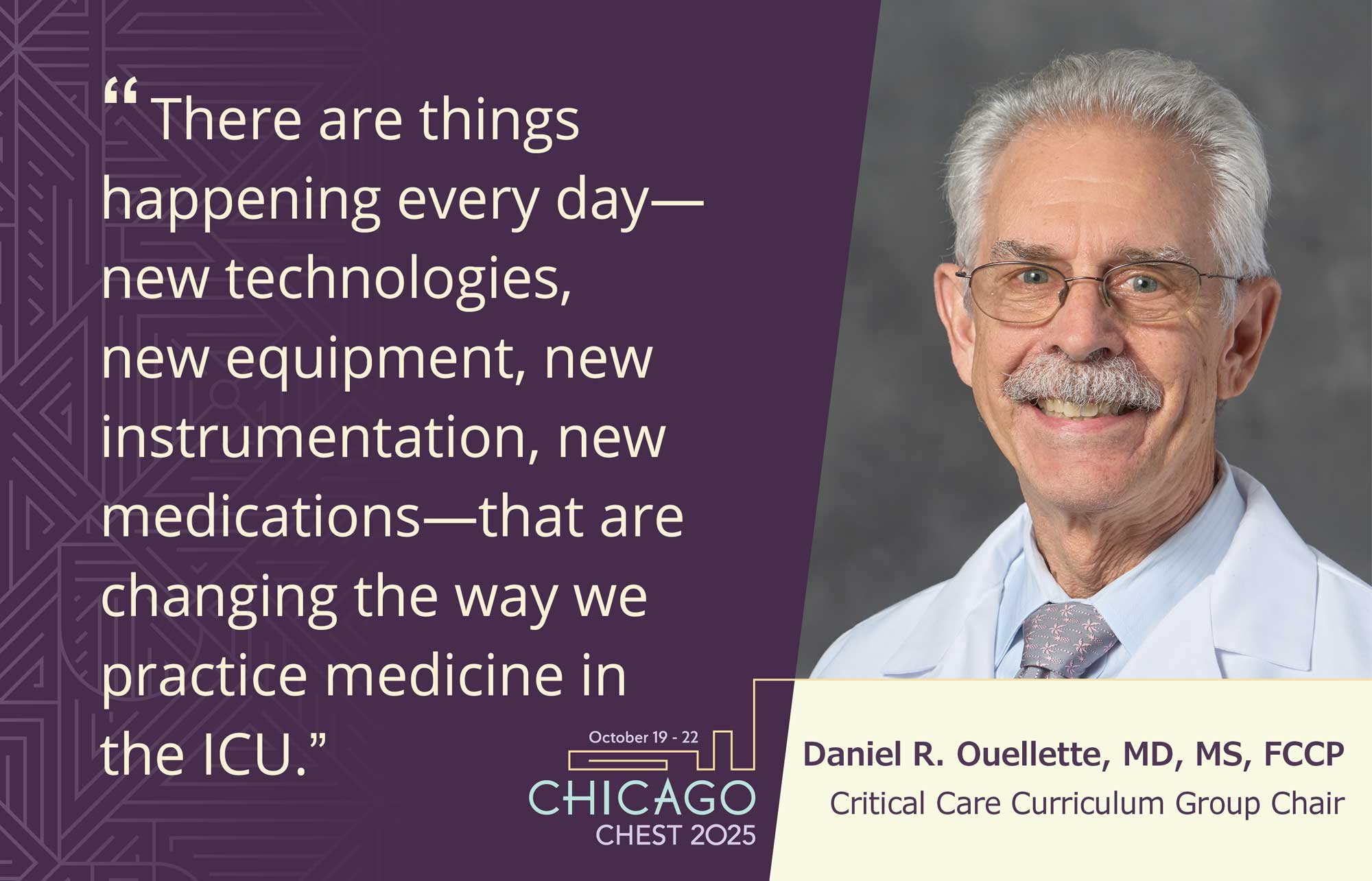
Keep up with the latest practices, perspectives in critical care
CHEST 2025 will present updates on cardiac output monitoring, diagnosing and addressing sepsis, best practices in endotracheal intubation, optimal use of new tools in mechanical ventilation, and much more.