
Sleep Medicine
-

AASM issues first guideline for inpatient management of OSA
Sleep specialist Dennis H. Auckley, MD, FCCP, said he hopes the recommendations move the field into the inpatient setting and help to identify those with undiagnosed sleep apnea.
-

Optimal synergy: Coupling smart wearable devices, sensors with AI algorithms
Coupling noninvasive wearable devices with AI-enabled data analytics helps to address two key challenges: health care access and improvement of patient-centric care.
-
Hypoxic burden emerges as a key cardiovascular risk marker in pediatric OSA
Investigator Olga Mediano, PhD, said hypoxic burden may more fully capture the physiological consequences of OSA by integrating the frequency, duration, and depth of oxygen desaturation events.
-

AI applications in pulmonary medicine: From training clinicians to transforming diagnostics and treatment
AI applications in health care are multiplying, and AI-focused research is gaining traction across specialties, including pulmonary, critical care, and sleep medicine.
-

Data show OSA is an independent, modifiable risk factor for cerebral microbleeds
The first prospective, longitudinal study of OSA and cerebral microbleeds (CMBs) found that moderate to severe OSA more than doubles the risk for microbleeds.
-

CMS releases updated guidance for NIPPV in patients with COPD
Understand the new CMS guidance, which comes after more than a decade of strategic advocacy efforts led by CHEST.
-

Study demonstrates strong patient compliance with oral device for OSA
Evidence suggests that an oral device may be an effective alternative for patients who can’t access or tolerate CPAP therapy.
-
Multidisciplinary panel highlights considerations for GLP-1 agonist use in OSA
Chitra Lal, MD, FCCP, discussed the current indications and coverage criteria for use of tirzepatide for treatment of OSA, as well as possible roles for other GLP-1 agonists.
-
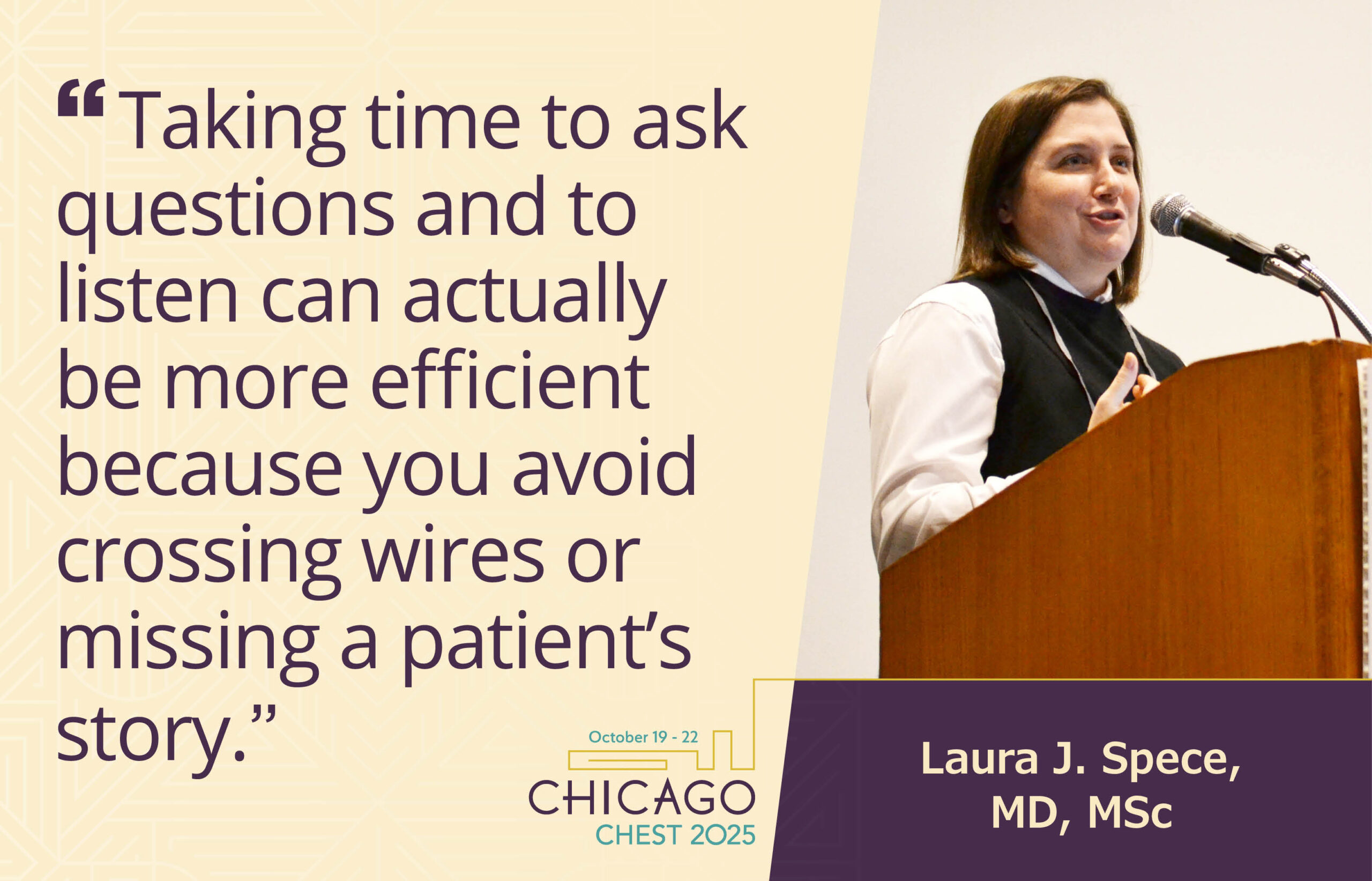
Clinicians share advice for working with vulnerable patient populations
Laura J. Spece, MD, MSc, spoke about specific respiratory health concerns for US military veterans during a session that also focused on optimizing care for patients who are transgender, patients shifting from pediatric to adult care, and patients with limited language proficiency.
-

Specialists review sex-specific variables affecting women with OSA
Ashesha Mechineni, MD, explained some of the embedded subtleties in OSA presentation and diagnostic parameters among women.
-

Case-based discussion to troubleshoot PAP nonadherence in OSA
Ritwick Agrawal, MD, MS, FCCP, will chair a Wednesday afternoon session addressing high nonadherence in PAP therapy for patients with OSA and exploring innovative neurotherapy options to help optimize care for complex cases.
-
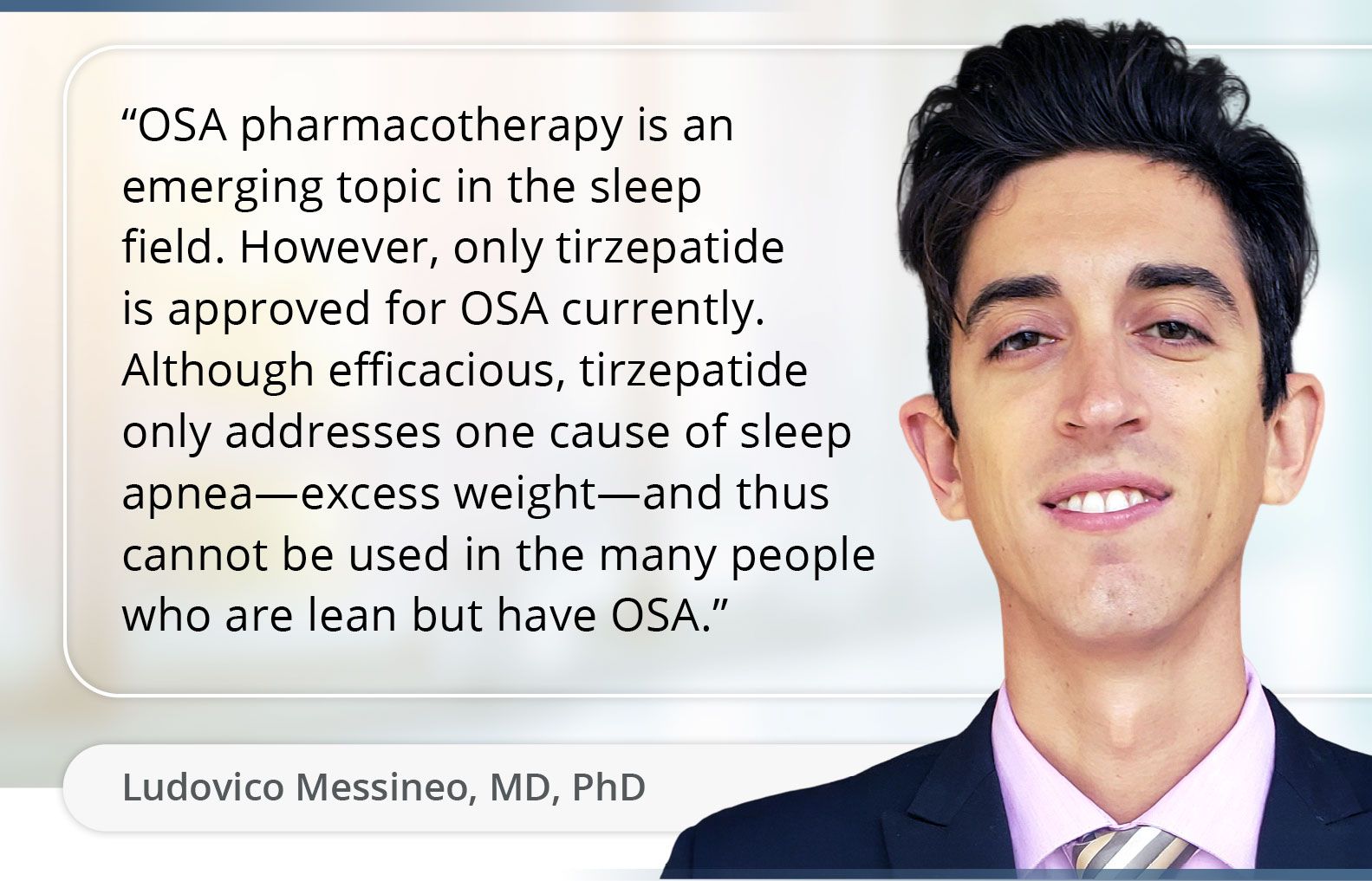
Viloxazine-trazodone combo shows promise for OSA relief
Investigator Ludovico Messineo, MD, PhD, said lower dosages will need to be tested to ensure that the beneficial effects on OSA severity are maintained while minimizing side effects.
