
CHEST Physician
-

Orexin receptor agonists: The evolution of precision medicine in narcolepsy type 1
This kind of therapy represents a promising and exciting step toward a precision medicine approach that directly targets the underlying deficiency of orexin signaling in narcolepsy type 1.
-

Opportunity, leadership, and the mindset for change
CHEST President Neil Freedman, MD, FCCP, reflects on the essence of leadership, mentorship, and the future of chest medicine.
-

The evolution of interventional pulmonology
Interventional pulmonology has rapidly evolved into a technology-driven specialty, with advances like robotic bronchoscopy and real-time imaging enabling safer, more precise access to peripheral lung lesions. These innovations allow clinicians to combine diagnostic and therapeutic procedures in a single setting.
-

DPP-1 inhibitors enter clinical practice
Sunjay R. Devarajan, MD, FCCP, and Anas Hadeh, MD, FCCP, said DPP-1 inhibitors are expected to become a new standard of care, with ongoing studies further defining their role in noncystic fibrosis bronchiectasis management.
-

Hypoxic burden from sleep apnea may predict peri-operative outcomes better than AHI
Recent results show that sleep apnea-specific hypoxic burden could help inform clinicians whether a patient can safely receive standard postoperative monitoring, said Andrey Zinchuk, MD, MHS.
-

HFOV outperformed conventional ventilation for neonatal ARDS in trial
While the results need to be verified in larger, multicenter populations, new data show high-frequency oscillatory ventilation reduced the incidence of bronchopulmonary dysplasia in preterm infants.
-

Catching decompensation earlier in acute pulmonary embolism
The 2026 AHA/ACC guidelines provide a much-needed physiological road map for the modern pulmonary embolism specialist with the introduction of new classification groups.
-

Navigating PE treatment: What AHA/ACC guidelines recommend
New AHA/ACC guidelines on acute PE care expand the recommended scope of catheter-based interventions for patients at increased risk of clinical deterioration and provide an in-depth discussion of the role of reperfusion therapies to treat PE.
-
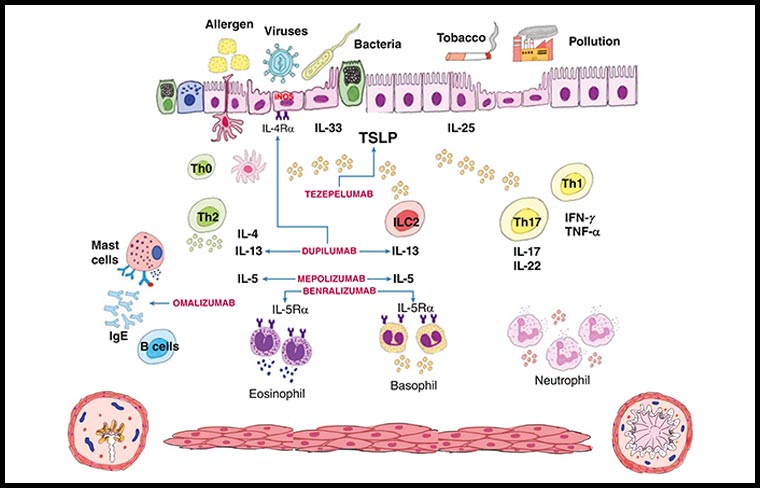
Biologic therapy for severe asthma: Time for precision, access, and accountability
Choosing the appropriate initial biologic and having the ability to implement timely changes in therapy, if needed, lead to improved patient-centered outcomes in severe asthma.
-

Top reads from the CHEST journal portfolio – June 2026
Read new research from the journal portfolio on anti-inflammatory therapies in adults with NCFB, using cognitive load to differentiate experience levels in EBUS bronchoscopy, and comparing opioid use in acute respiratory failure.
